
VALORANT’s Original Four Maps: Still Dominating in 2026
VALORANT maps and map roster evolve with iconic Haven, Bind, Split, and Ascent offering intense tactical gunfight battlegrounds.
When VALORANT landed in the summer of 2020, it came strapped with precisely four maps—no more, no less. Fast forward to 2026, and while the map roster has ballooned with icy tundras, floating cities, and neon-drenched nightclubs, the original quartet still stands as the sacred textbook of gunfight geometry. These aren’t just dusty relics; they’re the proving ground where legends are forged and rookies get unceremoniously deleted. Let’s wade through the chaos of Haven, Bind, Split, and the once-shadowy Ascent—with the kind of wit only a grizzled player can muster. 🎯
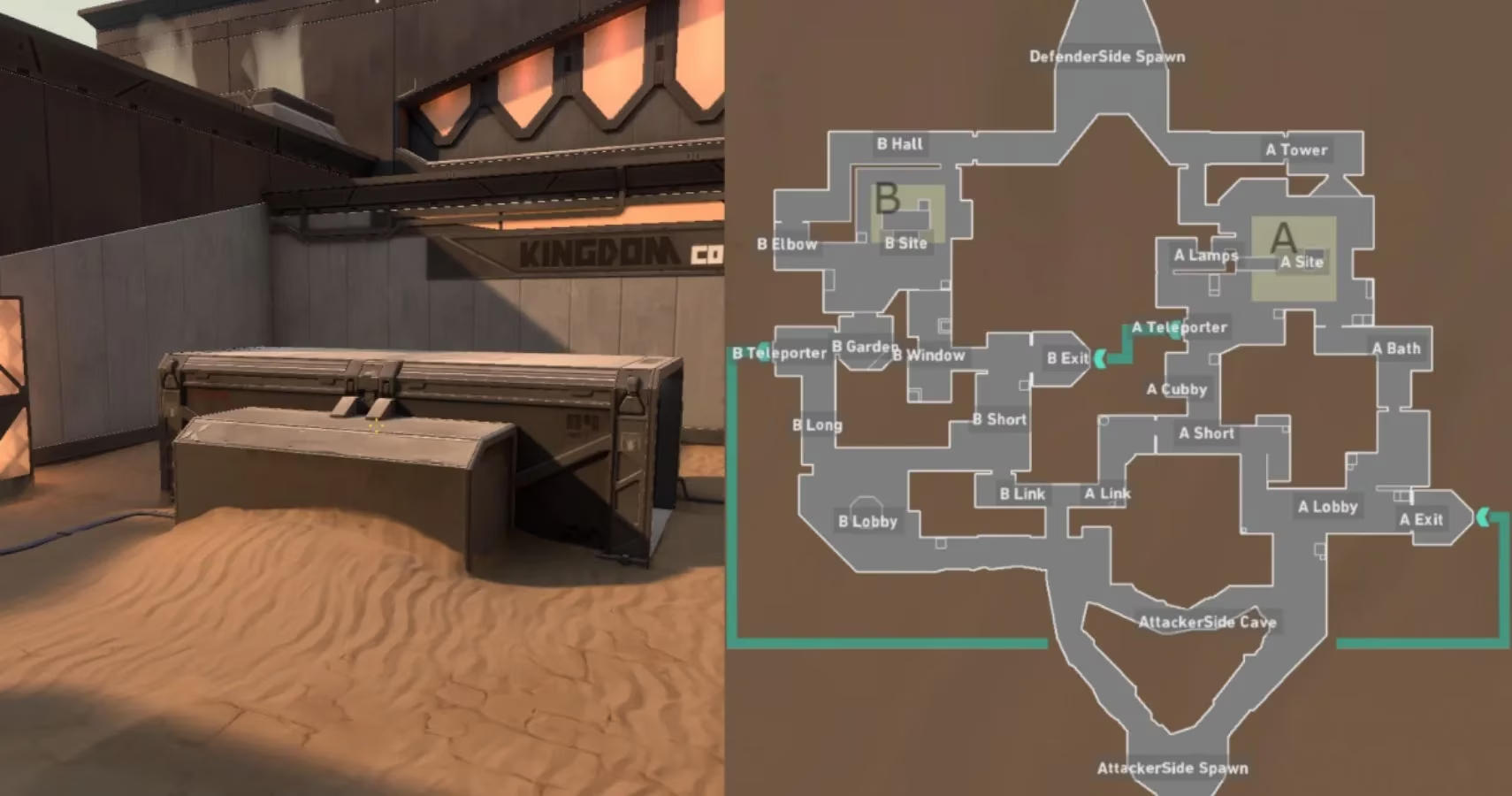
Haven: The Three-Headed Beast
Haven remains the map that makes CS:GO purists twitch involuntarily. It walks like a classic three-lane layout, talks like one too, but then slaps you with a third bombsite. That’s right—while most tactical shooters hand you two plates to spin, Haven demands you juggle three. A is a long-angle paradise where Operators sing, B sits in a cozy mid-ground brawl pit, and C lurks behind corners that eat rushers for breakfast. The middle lane is less a lane and more a furious intersection where defenders morph into octopi, arms stretching to cover every possible rotate.
Six years in, Haven’s core identity hasn’t budged. Rotations are deceptively fast because the sites huddle close together, yet one unchecked flank can collapse a perfect defence like a house of cards. Pro teams still debate whether a triple controller setup is pure genius or self-sabotage. For the average ranked warrior, the lesson is simple: if you don’t have a plan for the third site, you are the plan’s casualty. 🔺
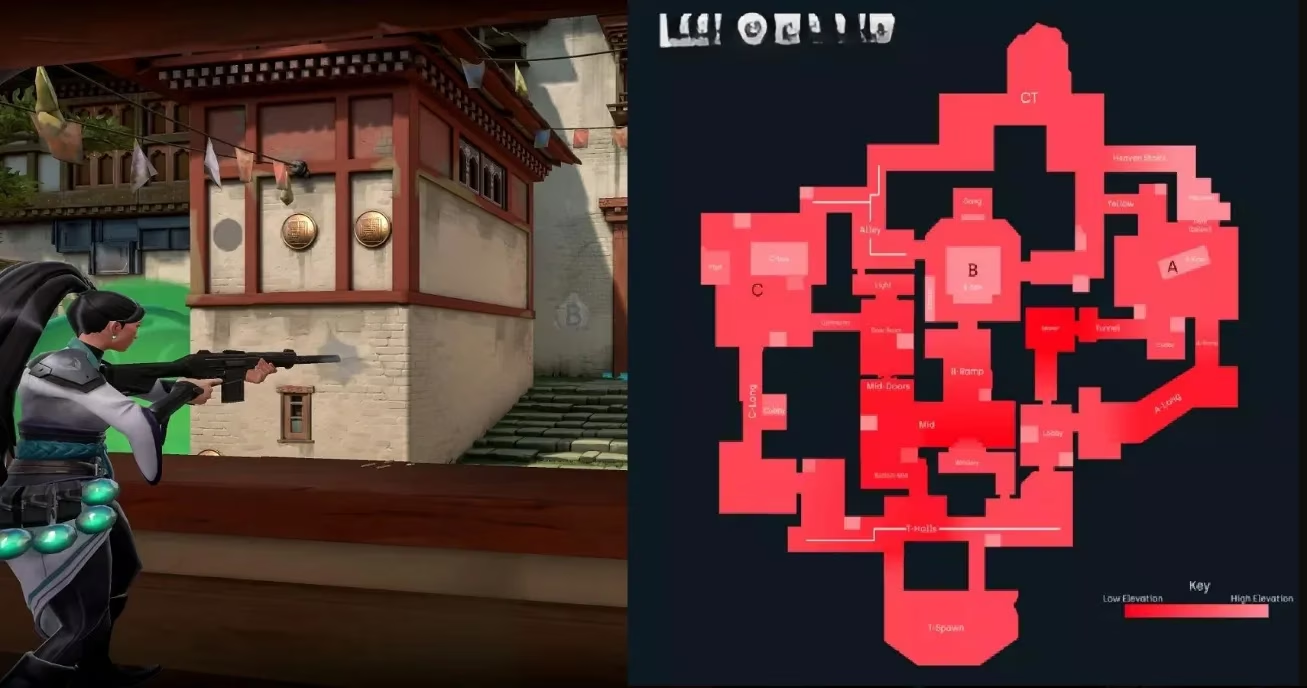
Bind: Portal Hopping Madness
If Haven is the studious older sibling, Bind is the chaotic middle child who discovered teleportation and never looked back. The map ditches the traditional middle lane entirely, leaving only two pathways—which turns rotations into a nerve-wracking gamble. But Riot’s stroke of genius (or cruelty) lies in the one-way portals. Step into one and a thunderous whoosh announces your journey to the entire server, effectively screaming “I’m rotating, punish me!”
The two portals stitch opposite ends of the map together. The A-to-B long portal near the sites lets you leap across the battlefield, while the smaller central portal connects the two lanes for sneaky agent ability casts—imagine a Raze grenade appearing from thin air. In 2026, players have grown wise to the portal’s audio cues; you’ll often hear a tp sound followed by a symphony of pre-fired Odin bullets. Bind rewards the paranoid and punishes the careless. Never forget: the portal is a gift, but also a dinner bell for the enemy team. 🌀
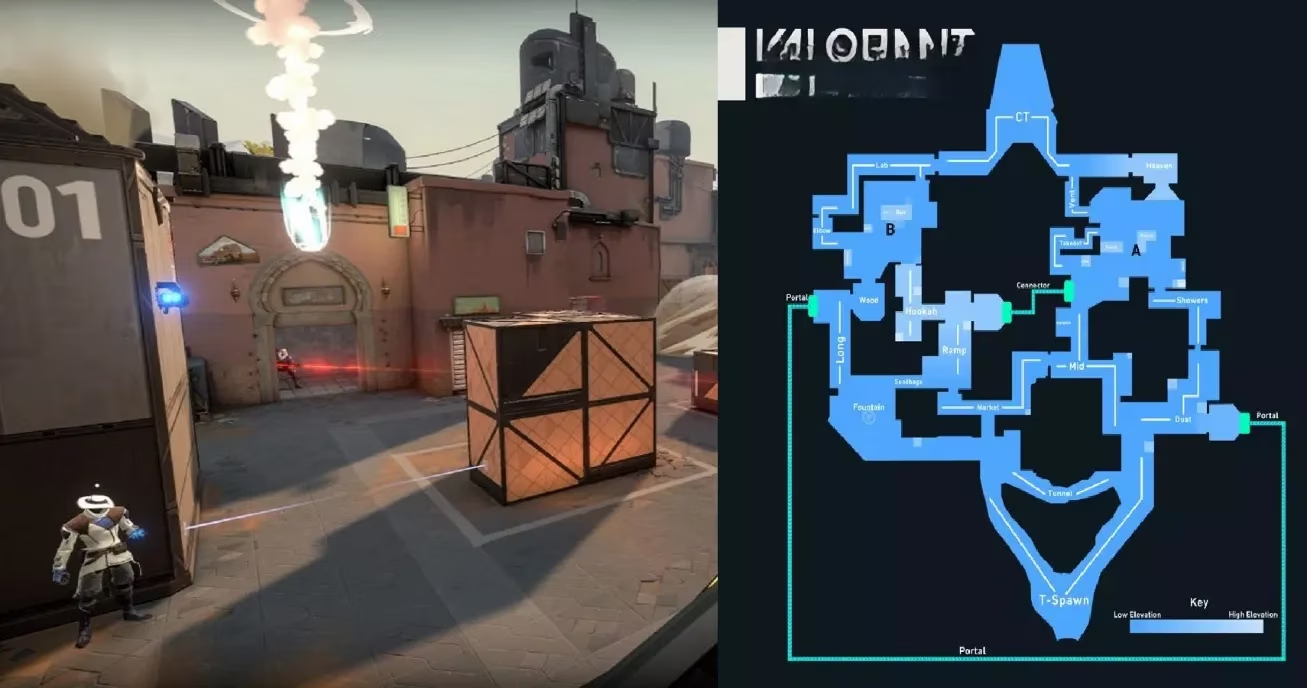
Split: Reach for the Ropes
At first glance, Split could pass for a conventional three-lane, two-site map. Then you look up. And down. And realize the entire map is a vertical death trap. High ground dominates every sightline, from the heaven perch on A to the gut-wrenching ropes that zip players up to B’s rafters. Tight choke points bottle everyone into kill zones, making control of the ropes feel less like a tactical choice and more like a desperate survival instinct.
Veterans of 2026 know that Split’s zip wires are double-edged swords. Ascend them silently and you might catch a defender sipping coffee. Ascend them loudly and you’ll be greeted by a Judge blast mid-air. The map’s true art lies in using abilities to clear those vertical angles—Sova darts are practically tour guides, and Brimstone smokes become life-saving umbrellas. Split doesn’t just test aim; it tests your fear of heights and your willingness to check every pixel above your head. ⛓️
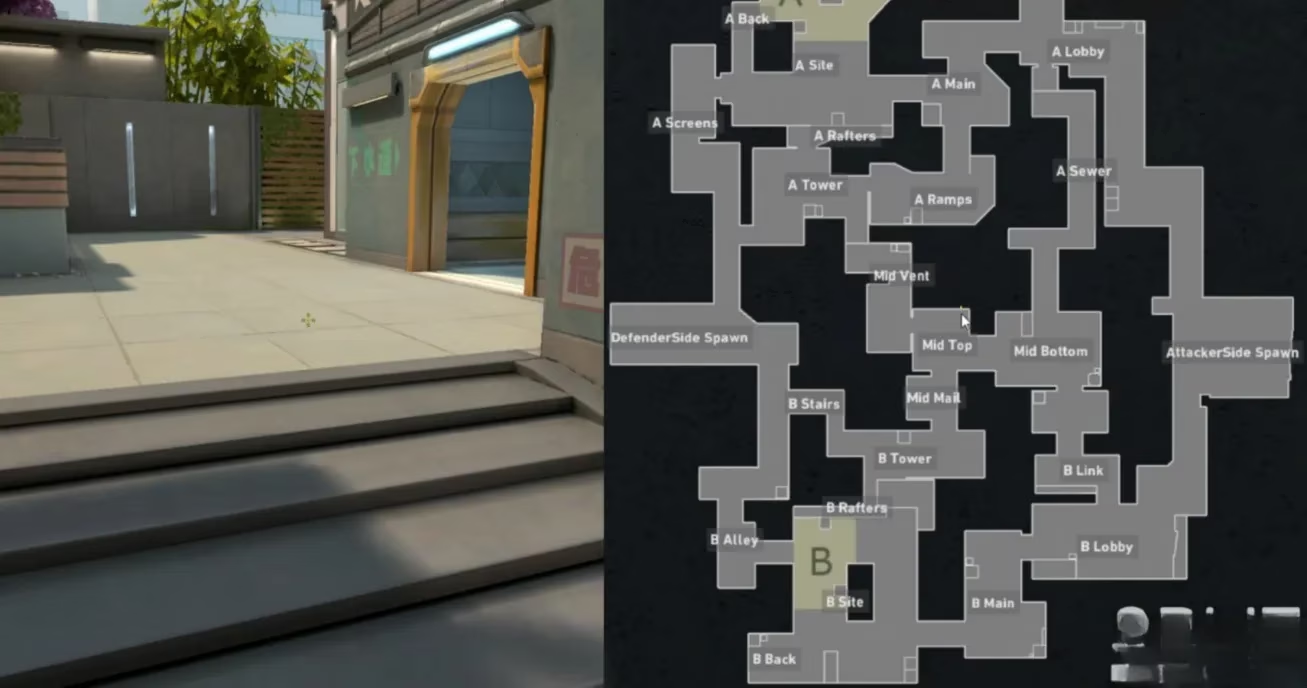
Ascent: From Leak to Legacy
Before VALORANT even exited its closed beta, a data miner named UlfricTheThird unearthed maps and textures for a Venetian-themed playground called Ascent. Fast forward to launch day, and there it was—a sun-soaked Italian plaza with grand arches, market stalls, and a conspicuous lack of water (the canals are just for show, tragically). Ascent’s layout mirrors the three-lane, two-site formula, but its soul lives in the controllable mid area and the two breakable wooden doors that let teams decide how open they want the map to be.
In 2026, those doors have been broken more times than a cheater’s resolve. The mid-door on Ascent has become a psychological battlefield: shoot it open early and you signal aggression; leave it shut and you invite slow-play mind games. The B site’s boathouse and sushi bar remain fan-favorite callouts that confuse new players and amuse the old guard. Ascent proved that even a leaked map can age like fine wine—provided you keep those doors oiled with bullets. 🍷
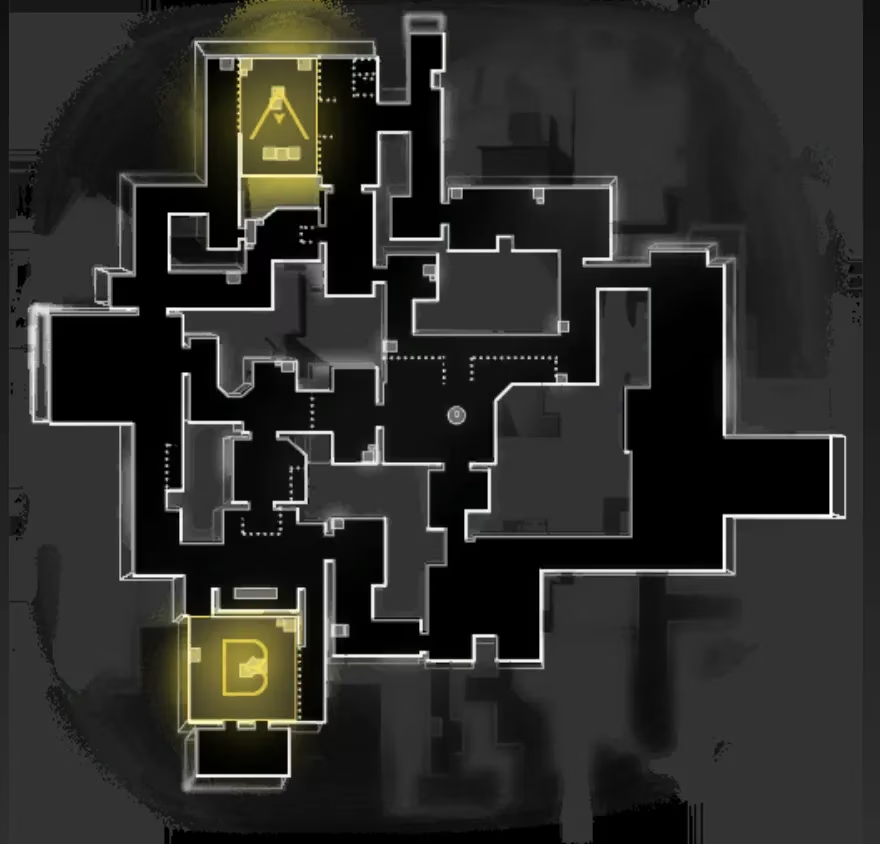
Each of these four maps has undergone subtle reworks over the years—a crate shifted here, a cubby removed there—but their DNA remains untouched. Haven still demands triple-threat awareness. Bind still turns rotations into an ear-splitting horror show. Split still makes you scroll your mouse wheel for altitude. And Ascent still stands as the gold standard of competitive balance. Learning them isn’t just a rite of passage; it’s the closest thing to a cheat code in a game that refuses to play fair. So drop into queue, call your strats, and remember: these maps have been schooling players for half a decade. Don’t let them add your name to the detention list. 📚