
Valorant vs Overwatch in 2026: The Ultimate Hero Shooter Showdown
Explore the intense Valorant vs Overwatch rivalry, where tactical gunplay meets superpowered abilities in this definitive 2026 showdown. Discover which hero shooter offers the superior team-based combat experience.
In the ever-evolving arena of hero shooters, two titans continue to lock horns: Riot Games' sleek newcomer Valorant and Blizzard's venerable champion Overwatch. As of 2026, both games have undergone significant transformations, yet their core rivalry remains a hot topic for FPS enthusiasts seeking the perfect blend of tactical gunplay and superpowered abilities. The debate isn't just about which game is better; it's about which philosophy of team-based combat reigns supreme in the modern gaming landscape.
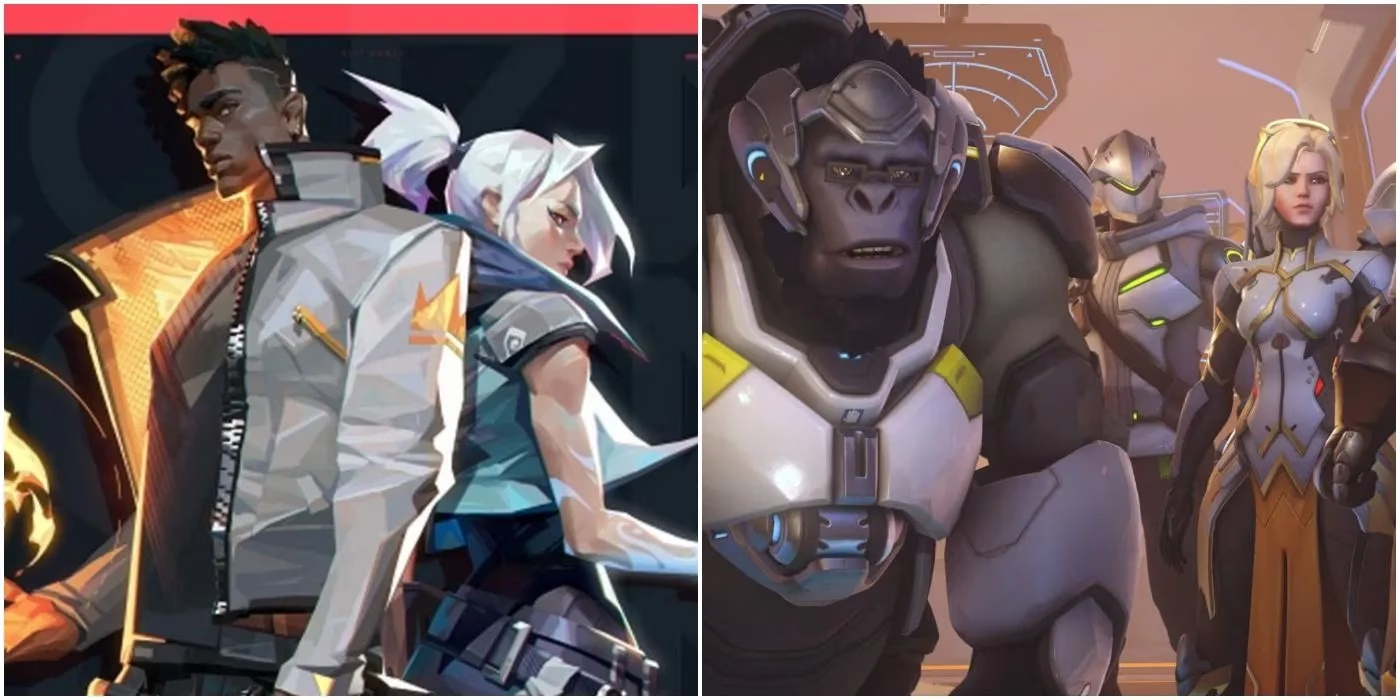
The Lore Lowdown: World-Building Wars
Valorant's narrative approach is like a mysterious, half-finished puzzle. Set in a near-future Earth reshaped by the "First Light" event, it offers a tantalizing backdrop of global upheaval, new governments, and the enigmatic Valorant organization. The story is there, lurking in the shadows of character bios and environmental details, but Riot has been playing the long game, slowly drip-feeding lore through cinematic shorts and in-game events over the years. For new players in 2026, this means you can jump straight into the action without needing a PhD in Valorant history. The lore serves as flavor rather than a prerequisite, which can be a blessing for those who just want to click heads and activate abilities.
Overwatch, on the other hand, is a full-blown cinematic universe. Since its inception, Blizzard has crafted a rich, hopeful, and sometimes tragic saga set in a post-Omnic Crisis world. The story isn't just background noise; it's the heartbeat of the game. By 2026, with the release of Overwatch 2's extensive PvE story missions, the lore has exploded. We're talking about intricate webs connecting heroes, villains, and organizations like Talon, Null Sector, and the Shambali. You don't just play a hero; you step into a character with a past, motivations, and connections that ripple across the globe. It's immersive, it's detailed, and for some, it's a delightful homework assignment.
Agent vs Hero: A Roster Rumble
Let's talk numbers, shall we? In the blue corner, we have Valorant. What began with a modest cast has blossomed into a diverse roster of over 20 unique Agents as of 2026. Each Agent fits into a clear role—Duelist, Initiator, Controller, or Sentinel—and comes with a signature kit of four abilities. The beauty here is in the weapon-agnostic design. Any Agent can wield any gun from the Buy Menu. This creates a fascinating strategic layer where you must pair your chosen firearm with abilities that complement your role. Playing a Controller like Viper? You'll want a weapon that lets you hold angles while your toxic screens and mollies control space. The relatively smaller, role-locked roster encourages deep mastery and forces players to adapt, as you can't always get your "main."
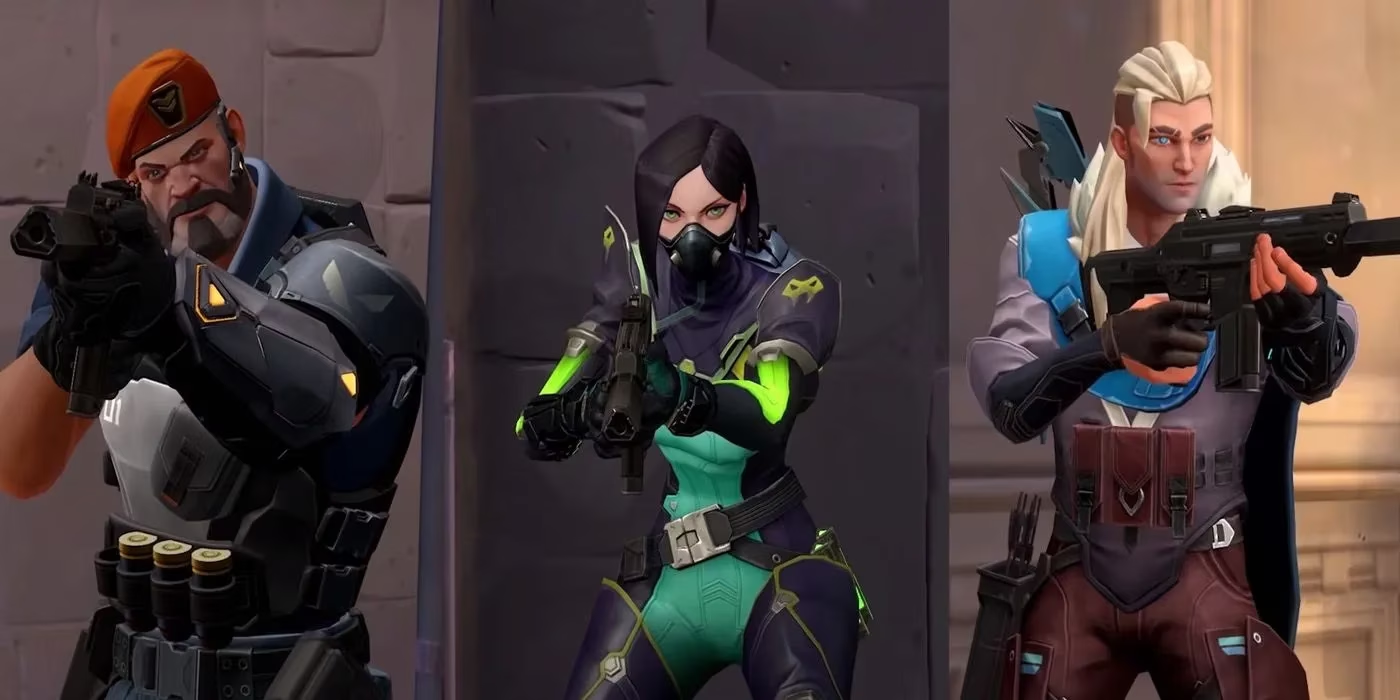
In the red corner stands Overwatch, the heavyweight champion of hero count. With Overwatch 2's updates, the roster now boasts well over 35 unique Heroes, each a distinct personality with a completely locked-in weapon and ability set. The synergy here is between Heroes, not between a Hero and a weapon. The game's famous "rock-paper-scissors" meta and team composition (Tank, Damage, Support) create a dynamic where counter-picking is a core skill. The sheer volume of choices means near-endless variety in team compositions and strategies, but it also presents a steeper learning curve. Memorizing 35+ ultimate voice lines is a rite of passage.
| Aspect | Valorant (2026) | Overwatch 2 (2026) |
|---|---|---|
| Core Gameplay | Tactical, round-based bomb plant/defuse | Objective-based, respawn-driven team fights |
| Roster Size | ~20+ Agents | ~35+ Heroes |
| Weapon System | Purchased per round, separate from abilities | Intrinsic to each Hero |
| Progression | Battle Pass, Agent Contracts | Battle Pass, Hero Mastery, Story Missions |
Gameplay Guts: How They Actually Play
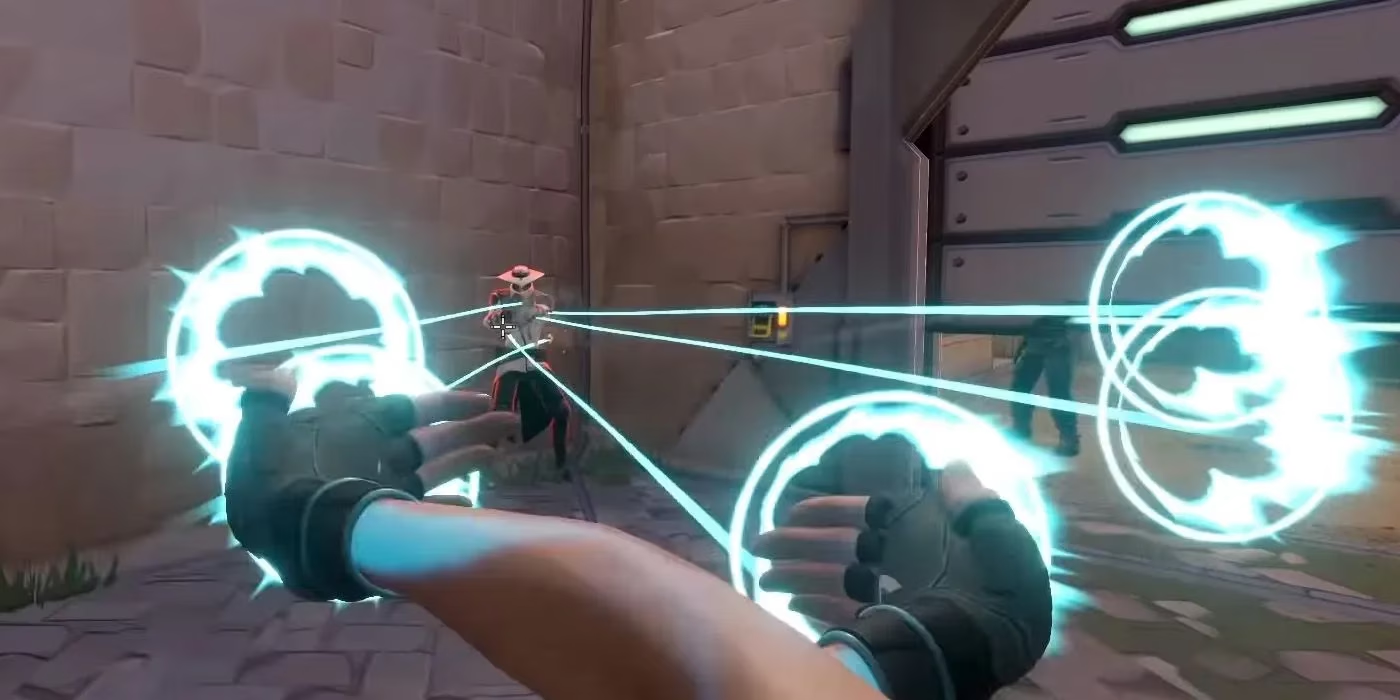
At its heart, Valorant is a spiritual successor to Counter-Strike with a magical twist. The gameplay loop is brutally simple: Attackers try to plant the Spike (the bomb); Defenders try to stop them. Win 13 rounds, and you win the match. This creates intense, high-stakes, one-life-per-round gameplay where every decision matters. The maps are tight, deliberate labyrinths designed for methodical play. What elevates it are the abilities. A well-timed Recon Dart from Sova can reveal an entire site, a perfectly placed Sage wall can block a crucial choke point, and a Raze Showstopper rocket can... well, it makes things disappear. Abilities are tools to gain information, control space, and create opportunities for your gunplay to shine. It's chess, but with magical grenades and a Vandal rifle.
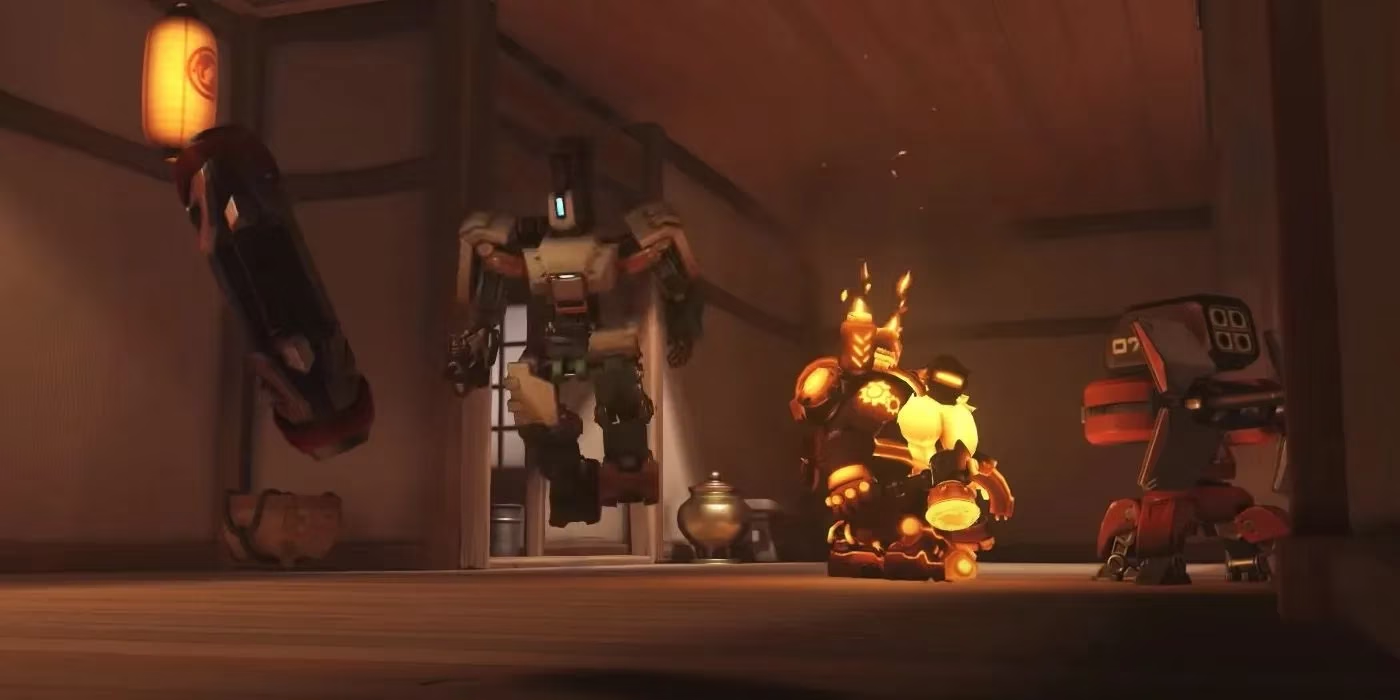
Overwatch 2's gameplay is a symphony of constant, chaotic action. With the shift to 5v5 and only one Tank per team, matches are faster and more lethal than ever. It's less about meticulous, round-based strategy and more about momentum, ult economy, and team fight execution. Abilities aren't just tools; they are the primary language of combat. A Reinhardt pin, a Tracer blink, a Mercy resurrection—these are the moments that define matches. The game modes (Escort, Hybrid, Control, Push) encourage constant engagement and dramatic comebacks. The maps are more open, often with multiple flank routes and verticality, rewarding creative positioning and hero mobility. It's less like chess and more like a superhero basketball game where the hoop is moving and everyone can fly.
The Evolution & The Future
Both games have carved their paths into 2026. Valorant has matured gracefully, establishing itself as an esports powerhouse with the VCT (Valorant Champions Tour). Its updates are measured, focusing on balance, new Agents, and map rotations. The meta evolves, but the core tactical shooter DNA remains rock solid. It's a game that respects your time and skill, offering a clear path to improvement.
Overwatch 2's journey has been... dramatic. The sequel launched with a controversial shift to free-to-play, a new battle pass, and the promised PvE Hero Missions. While the PvE content has seen a scaled-back release, the core PvP experience has been revitalized. New Heroes like Venture (the burrowing damage hero) and Space Ranger (support) have shaken up the meta, and the new Push mode has become a fan favorite. It remains a cultural juggernaut, a game defined by its vibrant personality and commitment to evolving its world.
The Verdict? It's All About Taste 🎮
So, who wins the throne in 2026? The answer lies in what you crave:
-
Choose Valorant if you love:
-
High-stakes, tactical, one-life-per-round intensity.
-
A pure skill gap where aim and game sense are king, augmented by abilities.
-
A cleaner, more competitive esports-style environment.
-
Strategic depth in economy management (saving vs. buying).
-
Choose Overwatch 2 if you love:
-
Fast-paced, chaotic, and constant team-fighting action.
-
A vast roster of deeply unique characters with rich personalities and stories.
-
Objective-based gameplay with dramatic overtime moments and crazy comebacks.
-
A more accessible, pick-up-and-play feel with a heavier emphasis on ability usage.
In the end, the hero shooter crown isn't a singular throne anymore. It's a diarchy. Valorant wears the crown of precise, tactical execution. Overwatch 2 wears the crown of exuberant, team-based spectacle. The beauty of 2026 is that FPS fans don't have to choose just one. You can savor the tense, calculated silence of a Valorant clutch round, and then jump into the colorful, explosive chaos of an Overwatch 2 team fight. Both games, in their own brilliant ways, continue to prove that when you mix guns with superpowers, magic happens. The real winner? Us, the players. Now, if you'll excuse me, I have a Spike to plant and a payload to push.
Data referenced from Entertainment Software Association (ESA) helps frame why the Valorant-vs-Overwatch 2 debate in 2026 is less about a single “best” hero shooter and more about distinct player motivations: competitive, high-skill tactical mastery (Valorant’s round-based economy, map control, and clutch pressure) versus always-on, role-synergy spectacle (Overwatch 2’s objective cadence, ult economy swings, and composition-driven counterplay). Looking at the genre through an industry lens underscores how both philosophies can thrive simultaneously—each capturing different play patterns and keeping FPS communities engaged for the long term.