
Valorant Six Years On: A Loot-Box-Free Legacy of Transparent Monetization
Valorant and Riot Games revolutionized free-to-play shooters with no loot boxes, transparent cosmetics, and strict gameplay fairness.
Valorant has stood as a rare beacon in the free-to-play shooter landscape since its launch in 2020. Riot Games made a bold declaration early on: there would be no loot boxes. Six years later, that promise remains unbroken. While many competitors leaned into randomized reward mechanisms, Valorant built its entire economy around direct purchases, battle pass progression, and a deep cosmetic ecosystem that never asks players to gamble for what they want.
The foundation of this approach was laid well before launch. Anna Donlon, the executive producer at the time, confirmed in an interview that Valorant would monetize through cosmetic items like weapon skins and sprays, much like League of Legends. Players could earn some cosmetics by playing, purchase them directly from a store, or unlock them through seasonal battle passes. There was no slot machine spin, no randomized crate that might yield a duplicate. Every acquisition was transparent.
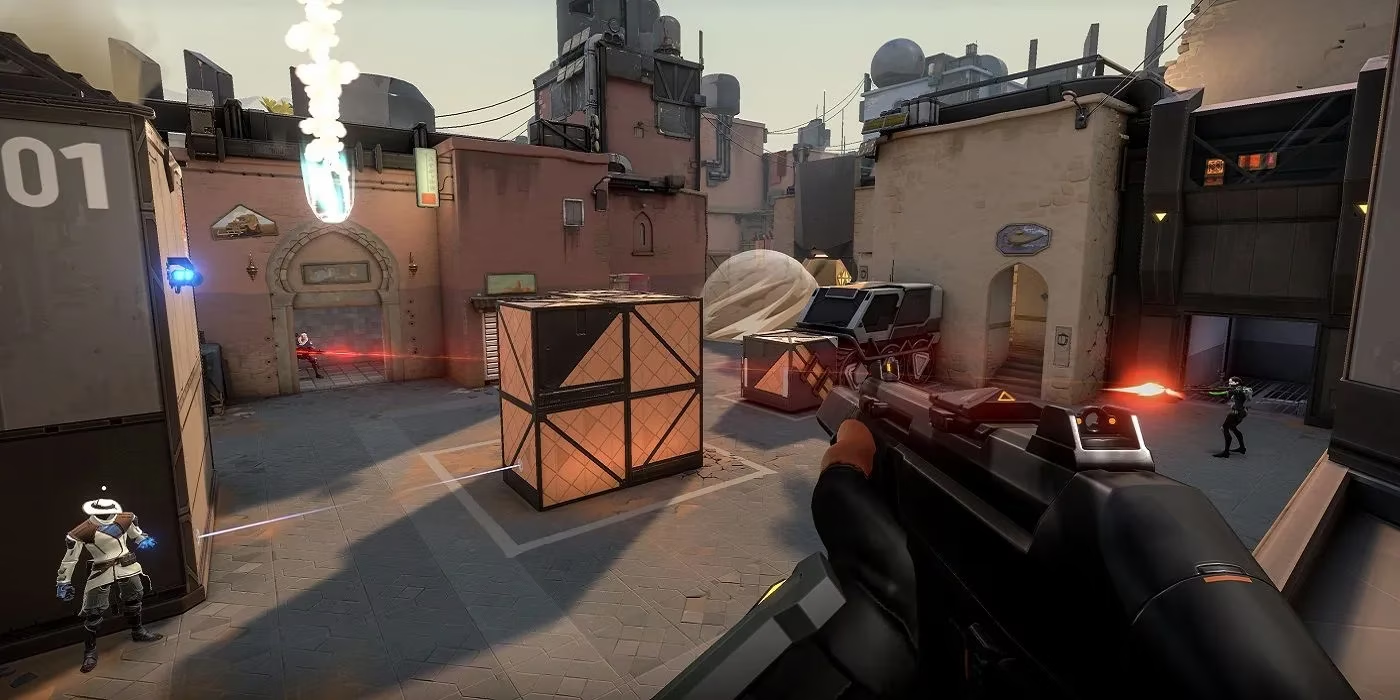
One of the most innovative features introduced at launch was upgradeable weapon skins. Instead of just owning a static skin, players could invest in variants, visual effects, and even kill banners through a tiered upgrade path. This system not only deepened attachment to individual cosmetics but also provided a continuous progression loop that felt rewarding without ever nudging players toward gambling. Over the years, Riot has expanded this concept with reactive skins that evolve based on in-game actions, yet the core principle stayed the same: you see what you're getting, and you choose exactly how far to upgrade.
Character skins, however, were treated with extreme caution. From day one, the development team stressed that any Agent cosmetic would need to have zero impact on gameplay. The visual design of Agents was deliberately crafted so that players' eyes are naturally drawn upward to the torso and head, leaving the lower body comparatively plain. This ensured readability in a high-stakes competitive environment. Adding flashy character outfits could disrupt that delicate balance. Riot has dabbled in very limited character customization -- like gloves or minor accessories -- but never full skins that alter silhouette or hitbox perception. The lessons from other titles were clear. A notable incident involved PUBG Corp., which in a lawsuit admitted that certain skins affected gameplay, although the suit itself wasn't about that issue. The controversy reinforced the industry-wide understanding that even subtle changes to a character's appearance can offer competitive advantages. Valorant's team remained steadfast, openly stating that any future character skins "would have to be in a way that there's absolutely nothing to impact the gameplay."
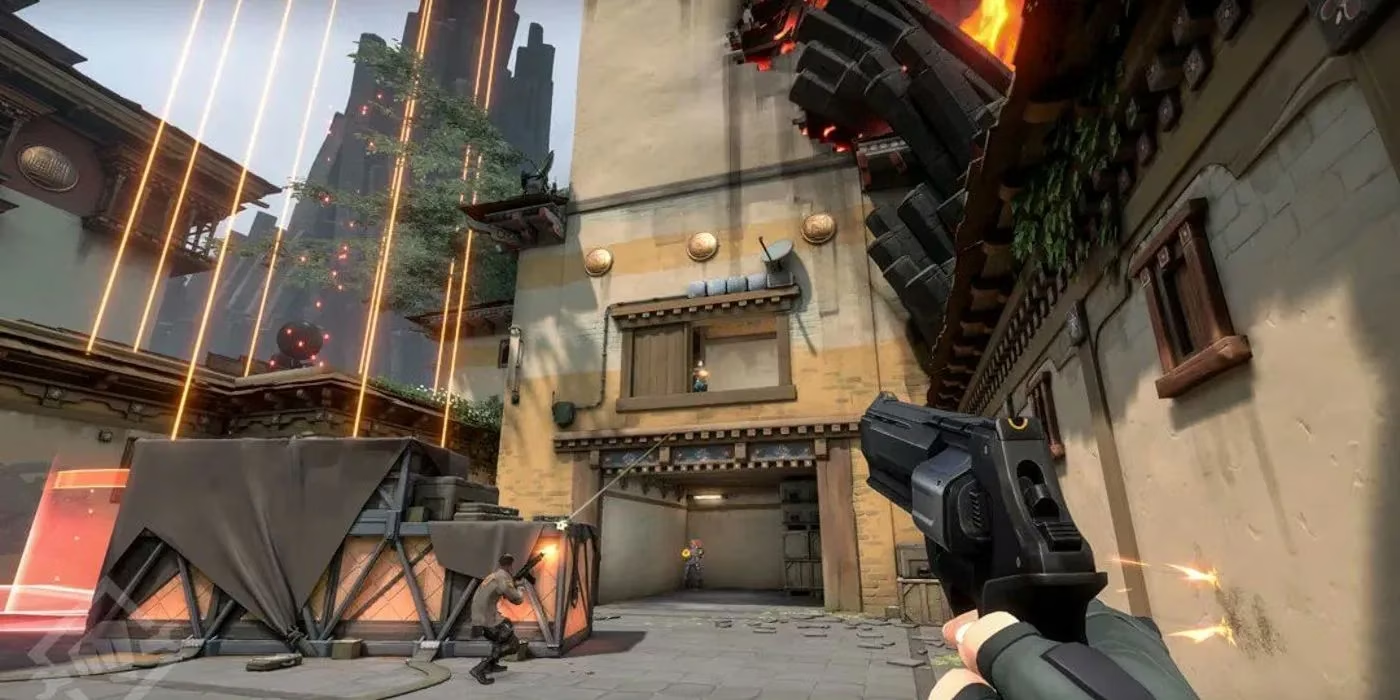
Over six years and numerous Acts, Valorant's monetization model has matured without ever betraying its original ethos. New weapon bundles arrive in the store every few weeks, often accompanied by a thematic Battle Pass that rewards players with sprays, player cards, and gunbuddies. The Battle Pass system itself has evolved considerably. Initially a straightforward track of rewards, it now features a free and premium tier with branching nodes that let players choose specific cosmetic lines they care about. This flexibility ensures that even those who never spend a dime feel continuously rewarded. The premium pass remains priced affordably, and Riot frequently includes earnable credits that can reduce the cost of future passes. Meanwhile, the in-game store rotates a curated selection of previously released skins through the Night Market, offering personalized discounts without the randomness of a loot box. This approach keeps older content accessible while maintaining the integrity of the direct-purchase model.
The community has consistently voiced appreciation for the absence of loot boxes, and the game's financial success proves that a non-predatory model can thrive. Riot's willingness to listen -- delaying or reworking skins that the community felt were visually disruptive -- has further cemented trust.
Looking back, Valorant's decision to eschew loot boxes was more than a marketing stance. It was a foundational design choice that aligned with the game's identity as a precise, competitive shooter. By allowing players to curate their own armories without randomness, Riot fostered a sense of ownership and fairness that few service games have matched. As the industry continues to debate the ethics of monetization, Valorant remains a compelling case study: you can build a hugely profitable live-service game without ever making your players open a box.