
Valorant's Ranked Mode: From Beta to Full Launch and the Anticipated Return
Valorant ranking system and competitive ladder underwent strategic refinement at launch, ensuring fairness and robust gameplay for all players.
In the dynamic world of competitive first-person shooters, the journey of Valorant's ranking system has been a tale of anticipation and refinement. When the game transitioned from its highly successful closed beta to its full public launch, players found themselves in a familiar yet altered landscape. The competitive ladder, a core feature that had defined the beta experience, was conspicuously absent at launch. This strategic removal by Riot Games was not an omission but a deliberate pause, a moment for the developers to catch their breath amidst the whirlwind of a global release. The studio was inundated with managing server stability, addressing early technical issues, and implementing robust anti-cheat measures to ensure a fair playground for all. More importantly, they were meticulously sifting through mountains of player feedback collected during the beta. The rapid evolution from beta to full version meant that some adjustments, informed by this community input, still needed to be integrated. In a developer blog post, Riot communicated a clear, albeit patient, timeline: the esteemed ranked mode was slated for a triumphant return within "a few patches."
The Strategic Pause: Leveling the Playing Field
This interim period served a dual, masterful purpose. For the legion of new agents entering the fray with the full release, it provided a crucial grace period. Without the immediate pressure of ranked placement matches, newcomers could freely explore the game's intricate mechanics, learn the unique abilities of each agent, and map layouts without the fear of negatively impacting a hidden MMR (Matchmaking Rating). This effectively created a more equitable starting line. Veterans from the closed beta, who had months of prior experience, also found themselves in a similar position they were once in—practicing in an unranked environment before the competitive gates opened. This symmetry ensured that when ranked play did return, the player base, both old and new, would have had sufficient time to adapt to any post-launch balance changes, agent tweaks, and meta shifts. It was a design philosophy centered on preparation and fairness.
Evolving the Ecosystem: More Than Just a Ladder
The delay wasn't merely about fixing bugs or balancing weapons; it was about thoughtfully evolving the entire competitive ecosystem. Riot Games was actively working on enhancing the foundational systems that support ranked play. This included:
-
Anti-Cheat Vigilance: Fortifying the Vanguard system to maintain competitive integrity was paramount. 😤
-
Server Performance: Ensuring low latency and stable connections for precise, skill-based gameplay.
-
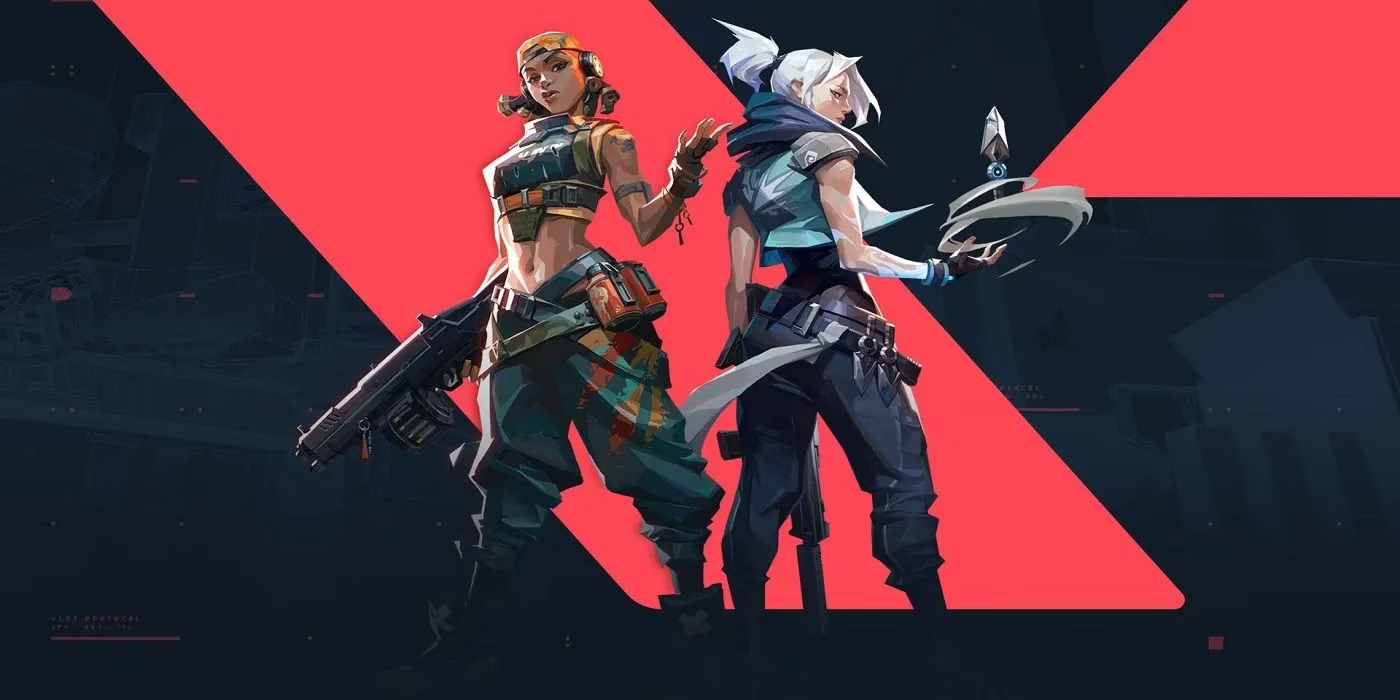
Agent Pool Integration: Accommodating new agents, like the formidable duelist Reyna, into the competitive meta and ensuring they were balanced for ranked environments.
-
Ranking Algorithm Refinements: Tweaking the behind-the-scenes formulas that determine skill tiers and promotion matches based on beta data.
The Anticipated Return and Lasting Impact
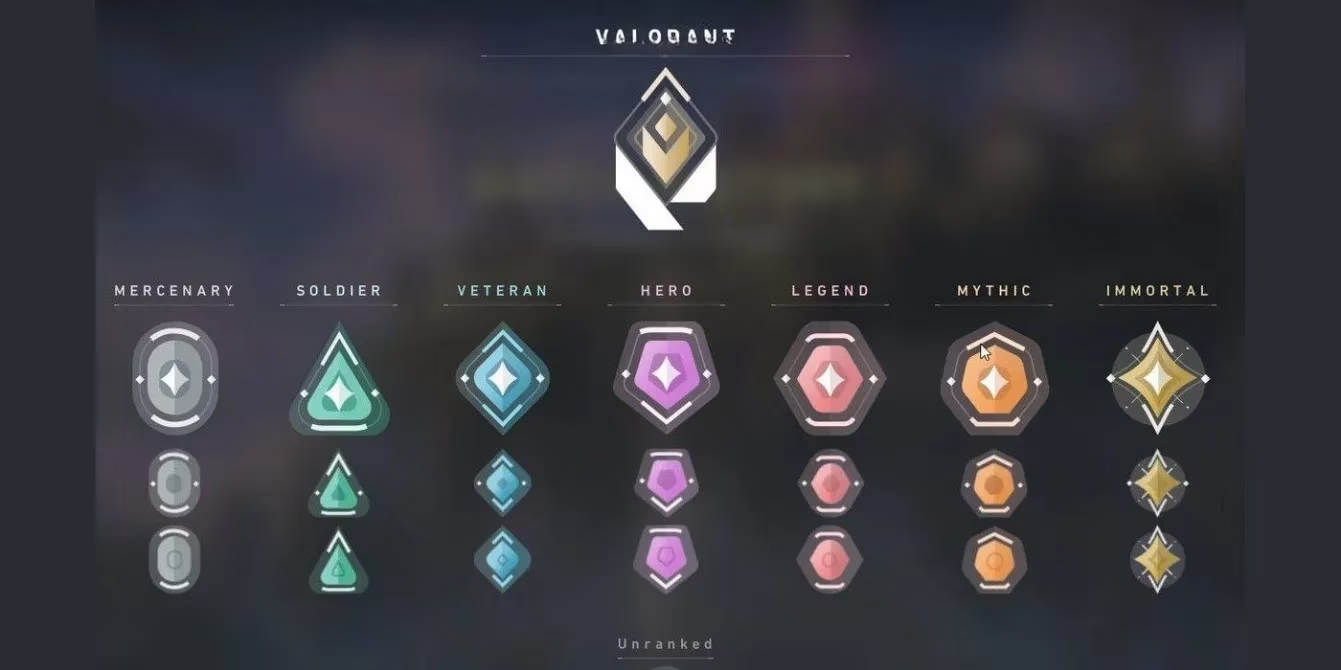
As patches rolled out in the weeks following launch, the community's anticipation reached a fever pitch. When Riot Games finally reinstated the competitive queue, it marked the beginning of Valorant's true endurance test. The ranked system returned not as a simple copy of its beta incarnation, but as an evolved, more resilient feature. It introduced players to the grind through tiers like Iron, Bronze, Silver, Gold, Platinum, Diamond, Immortal, and the pinnacle, Radiant. The return of competitive play transformed the community's engagement, shifting the focus from casual exploration to dedicated mastery and prestige. Climbing the ranked ladder became the primary goal for millions of players, fueling countless hours of practice, teamwork, and strategic evolution. This calculated launch strategy—releasing the core game first, then the competitive framework—proved instrumental in building a stable and massive player base. It allowed the game's fundamentals to solidify before layering on the high-stakes pressure of ranked competition. By 2026, this foundational approach is seen as a case study in successful live-service game launches, demonstrating that sometimes, the best way to run a race is to ensure everyone is properly warmed up at the starting line. The wait for ranked play, once a point of curiosity, ultimately cemented Valorant's reputation as a meticulously crafted tactical shooter built for long-term competitive legacy.