
Valorant's Omen Invulnerability Glitch: A Cautionary Tale of Live Service Game Updates
In the ever-evolving landscape of live service games, the 2026 Valorant Omen glitch starkly highlighted how a routine patch can inadvertently create an unstoppable, game-breaking 'god mode'.
In the ever-evolving landscape of live service games, even the most meticulously planned updates can sometimes yield unexpected and game-altering results. In 2026, the popular tactical shooter Valorant experienced a stark reminder of this principle. A routine patch, intended to refine balance and introduce improvements, inadvertently transformed the shadowy controller Omen into an unstoppable force. Players quickly discovered a simple, easily replicable sequence that granted Omen complete invulnerability for the remainder of a match. This unintended 'god mode,' coupled with an ability to teleport past defensive barriers prematurely, immediately disrupted the game's competitive integrity, forcing developer Riot Games into swift and decisive action.
The glitch itself was disarmingly straightforward, requiring no advanced technical skill to exploit. It was triggered by activating Omen's ultimate ability, 'From the Shadows,' and having it canceled just as a round concluded. This sequence left the character in a bugged state where he was immune to all damage for the entire subsequent match. While bullets would still visually impact Omen, halting his movement, his health bar remained untouched. This, combined with the ability to bypass setup-phase barriers, allowed Omen players to secure critical map positions with impunity, creating an overwhelmingly unfair advantage. The community's discovery was rapid, and highlights of the invincible Omen dominated gaming feeds, presenting a significant challenge to Valorant's carefully cultivated competitive ecosystem.
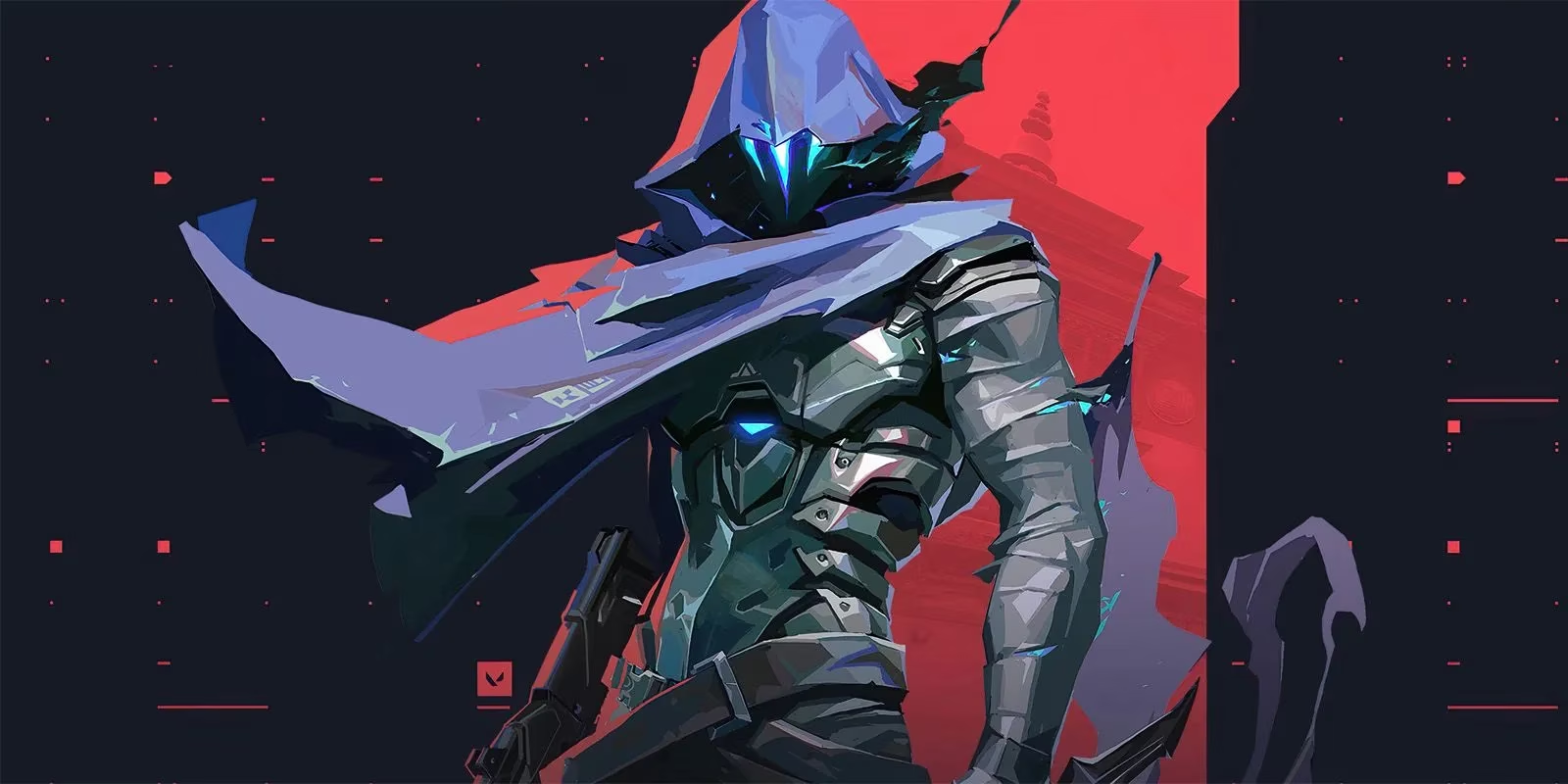
Riot Games' response was characteristically swift. Faced with a bug that fundamentally broke the game's core mechanics, the studio made the unprecedented but necessary decision to temporarily remove Omen from the playable agent roster entirely. This drastic measure, while disruptive, was a clear signal of their commitment to preserving fair play. The agent was placed into what the community termed 'emergency maintenance' while developers worked on a comprehensive fix. Within a short period, Omen was reinstated with patch 1.07's issues fully resolved, restoring balance to the game. This incident underscored the complex dance of maintaining a live service title: introducing new content and balance changes while ensuring the foundational gameplay experience remains stable and fair for millions of players worldwide.
This episode was not an isolated case of development growing pains but rather a symptom of the intense pressure and rapid iteration cycle inherent to games-as-a-service. Riot has historically demonstrated a profound commitment to polish, as evidenced by the legendary five-year development cycle for the fan-favorite Ascent map—a process far exceeding the industry standard. This dedication to quality makes such a disruptive bug particularly noteworthy. It highlights how even with rigorous internal testing, the unpredictable interactions within a live game environment, played by a massive global audience, can surface critical issues only after public deployment. The Omen glitch served as a powerful case study in the importance of robust quality assurance pipelines, especially for title-defining updates.
Key Takeaways from the Omen Glitch Incident:
-
Live Service Vulnerability: Even major studios are susceptible to game-breaking bugs post-launch, emphasizing the inherent complexity of online multiplayer ecosystems.
-
Swift Mitigation is Crucial: Riot's quick response to disable the affected agent prevented long-term damage to the game's competitive integrity and player trust.
-
Community as a Test Bed: The player base often acts as the ultimate stress test, uncovering edge-case interactions impossible to replicate fully in controlled environments.
-
Balance is Fragile: A single bug can dismantle meticulously designed agent balance, reminding developers that every change carries risk.
Looking forward, the incident has likely reinforced Riot's protocols for update deployment. While the studio continues to aggressively expand Valorant with new agents, maps, and features, there is an increased industry-wide awareness of the need for layered testing strategies. These include extended periods in public test environments (PTEs), more comprehensive automated regression testing, and perhaps even phased rollouts for major patches. The goal is to catch such critical flaws before they reach the live servers, ensuring that new content enhances the experience without unintended consequences. The tale of the invincible Omen remains a memorable chapter in Valorant's history, a reminder that in the digital battlegrounds of tactical shooters, the most formidable opponent can sometimes be a line of bugged code.