
Valorant's Evolution: New Casual Modes & Regular Updates Shape the 2026 Gaming Landscape
Discover the dynamic evolution of Valorant's gameplay in 2026, where Riot Games masterfully expands beyond core competitive modes. The strategic introduction of casual, social experiences brilliantly counters player burnout, fostering a richer, more engaging tactical ecosystem.
In the ever-competitive world of tactical shooters, Riot Games' Valorant has solidified its position as a premier title, captivating a dedicated player base with its strategic depth and unique agent abilities. As of 2026, the game continues to evolve, with developers actively responding to community feedback to refine the experience beyond its core competitive framework. The initial vision for incorporating "social downtime" within the high-stakes environment has blossomed into a key pillar of the game's long-term strategy, acknowledging that players seek variety beyond the relentless grind of ranked play.
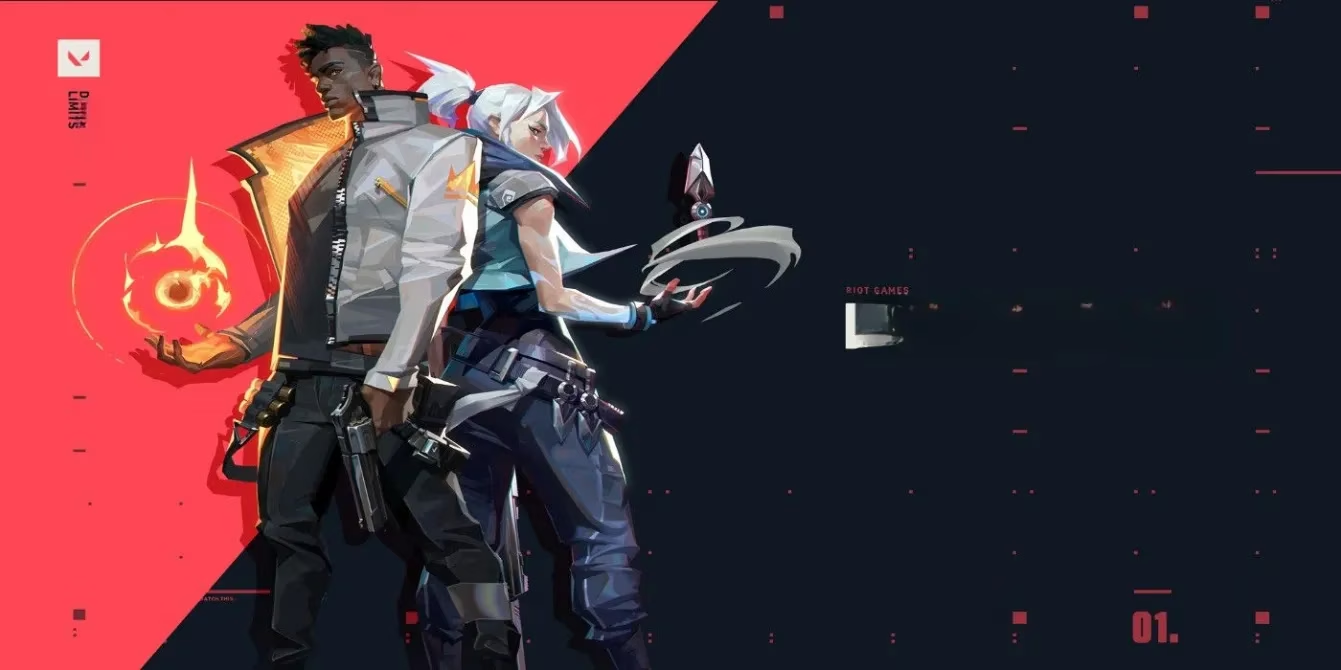
The development team, led by Game Director Joe Ziegler, has long recognized the need for spaces where players can either warm up or simply unwind. The original offerings of Spike Rush, Deathmatch, and the standard Plant/Defuse modes, while foundational, created an ecosystem as relentless as a metronome's unceasing tick. Ziegler's philosophy was clear: "Those are the spaces that I think we're going to continue to see growing around Valorant. More tools to help you compete, but also more tools to actually help you just live a more full life inside of Valorant." This commitment aimed to prevent player burnout from "very stressful competitive games back-to-back,\" a sentiment that has guided the title's expansion for years.
🎯 The Drive for Disruption & Freshness
A cornerstone of Valorant's update philosophy remains its deliberate, disruptive approach. The development team operates on a principle of calculated evolution. "We want to be able to, like, every time we provide a new thing, it's going to be disruptive," Ziegler explained. This is most evident in the meticulously planned agent release schedule. Maintaining a steady, two-month cadence for new characters provides a rhythm to the meta—a predictable yet exciting seasonal shift for the ecosystem. This cadence gives the community "enough time to learn and stabilize your perception [of] the game in preparation for a new character to come in." This methodology acts like a gardener carefully rotating crops, ensuring the soil of the game's meta never becomes exhausted and always yields new strategic harvests.
🕹️ Envisioning the Casual Playground
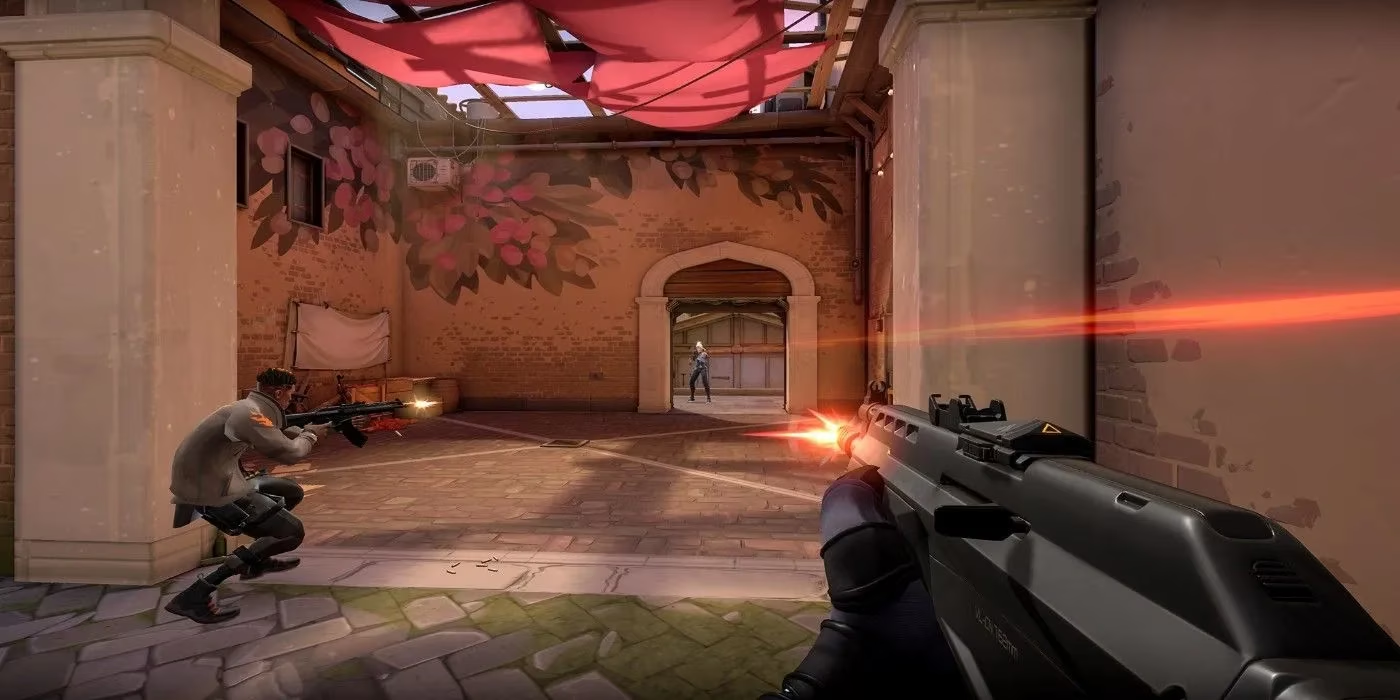
While the specific mechanics of early proposed casual modes were not originally detailed, the intent was to create a counterbalance to the competitive intensity. The goal was to offer an experience less focused on the scoreboard and more on experimentation, socialization, and pure fun. Imagine modes where ability cooldowns are drastically reduced, creating chaotic, spectacle-filled battles, or objective-based scenarios divorced from the standard Spike mechanic. These spaces could serve as both a training ground for new tactics and a digital lounge for friends. Implementing such modes is a complex balancing act, requiring careful design to ensure they complement rather than detract from the game's competitive soul.
📈 Impact on Players & Viewership
The dual-pronged strategy of regular, disruptive updates and expanded casual content has profound implications:
-
For the Player Base: It caters to a broader spectrum of gamers. Hardcore competitors get a constantly evolving challenge, while casual players or those needing a break from ranked find welcoming, lower-stakes environments. This helps retain players by reducing fatigue, much like a symphony varying its tempo between exhilarating crescendos and peaceful adagios.
-
For the Esports Scene: Regular agent introductions and meta shifts keep the professional scene dynamic and unpredictable. Viewers are treated to an ever-changing landscape where team strategies and player adaptations are constantly tested. This steady stream of "game-changing features" is crucial for maintaining engaged viewership, as the spectacle never grows stale.
⚖️ The Ongoing Balancing Act
The path forward for Valorant is not without its challenges. Introducing casual modes must be done without diluting the precise, tactical identity that earned the game its dedicated following. Similarly, frequent disruptive updates must avoid making the game feel unstable or unfamiliar to its core audience. The development team's task is akin to a master chef seasoning a complex dish—too little change and the experience becomes bland; too much, and the original flavor is lost. They must continually gauge community reaction, ensuring new features feel like natural extensions of the Valorant universe.
| Update Focus Area | Player Benefit | Development Goal |
|---|---|---|
| Casual Mode Expansion | Reduced burnout, social play, skill practice | Create a "full life" experience within Valorant |
| Regular Agent Releases | Evolving meta, continuous learning, fresh strategies | Maintain a disruptive yet predictable update cadence |
| Core Game Refinement | Polished performance, balanced gameplay | Stabilize the foundation for new content |
Looking ahead to 2026 and beyond, Valorant's trajectory is defined by this commitment to holistic growth. The game is no longer just a competitive shooter; it is evolving into a multifaceted platform offering a range of experiences, from the heart-pounding tension of professional play to the relaxed camaraderie of casual modes. By investing in both the competitive integrity and the social playground aspects of the game, Riot Games is building a more resilient and engaging ecosystem. The success of this endeavor hinges on the team's ability to listen, adapt, and carefully balance the new with the familiar, ensuring Valorant remains a vibrant world for all who enter its domain. 🔫💥✨