
Valorant's 2020 Metacritic Review Bomb Is Still A Bad Faith Mess In 2026
Valorant review bomb on Metacritic sparks debate over gameplay, CS:GO clone claims, and Riot Games’ Tencent ownership.
I have played Valorant on and off since the closed beta, and in 2026 I still find myself explaining to newcomers that this game is not just a lazy CS:GO clone or a Tencent data-mining operation. When I look back at the infamous Metacritic review bomb that hit the game shortly after launch, the same three complaints dominate: graphics and gameplay criticism, accusations of copying Valve's CS:GO, and anti-Tencent rants. As an ordinary player, I have to ask: how many of those zero scores were actually about the game?
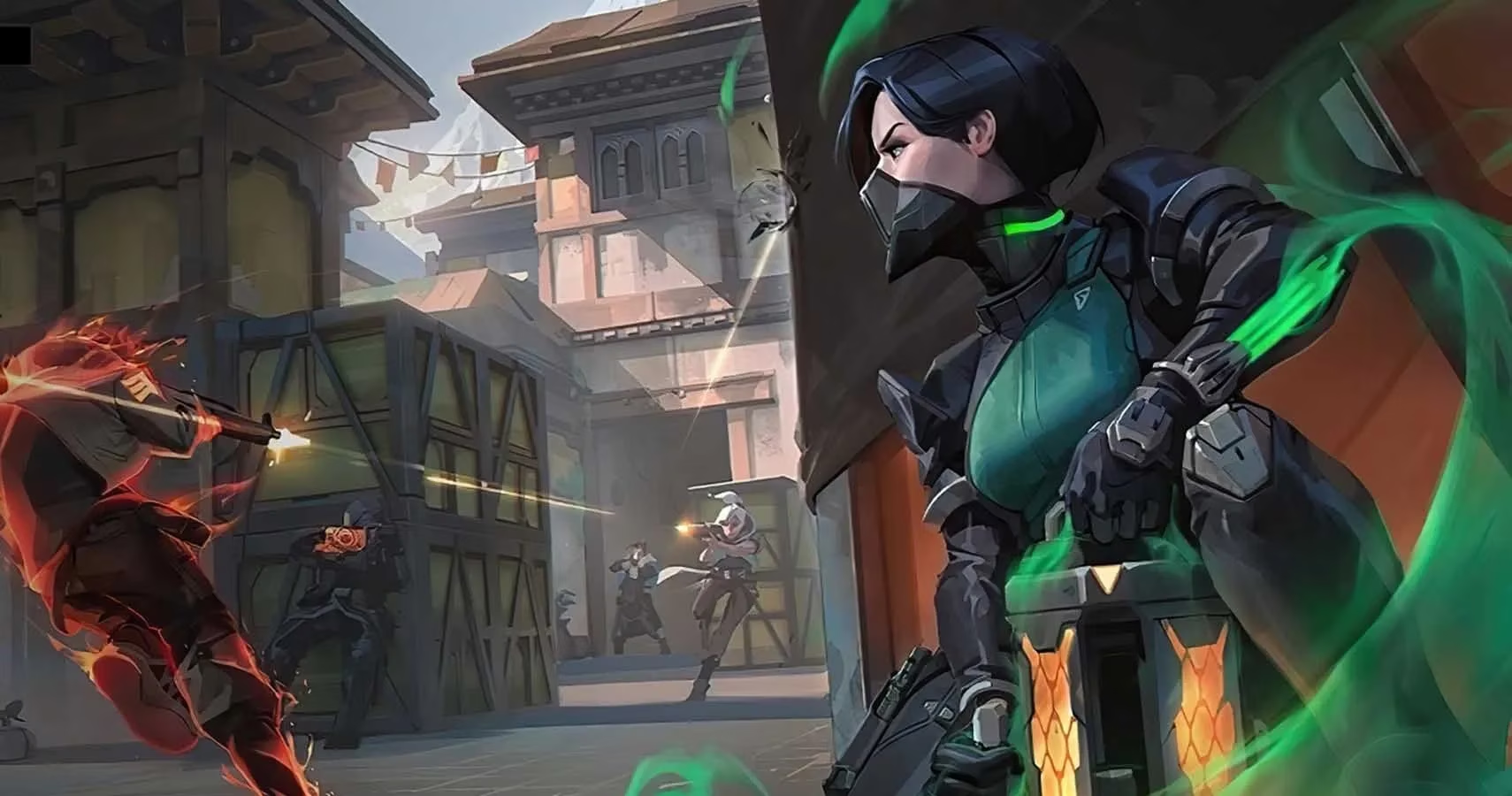
It appears that a review bomb for Valorant was underway on Metacritic, as hundreds of accounts uploaded negative reviews. The negative reviews centered on three claims. First, players harshly critiqued both the graphics and gameplay. Second, users claimed that the game is a clone of Valve's CS:GO. Lastly, there were complaints that it is made by Riot Games, which is owned by Tencent.
The review bomb produced three main lines of attack:
-
🎮 Harsh criticism of graphics and gameplay
-
🕹️ Claims that Valorant is a clone of CS:GO
-
🏢 Complaints about Riot Games being owned by Tencent
Let me break down each complaint from a player's perspective in 2026.
🎮 The gameplay and graphics complaints
Forbes pointed out that the complaints regarding gameplay, graphics, and technical performance seemed a bit fishy, considering these were not complaints during the beta. If anything, the beta received glowing reviews specifically regarding these points. I remember the beta being praised for crisp gunplay, clear visual readability, and stable netcode. Of course, launch is different from beta, and server issues can happen. Some users did comment that the game felt empty or that there were server issues. Those are fair points for a new online shooter. But hundreds of zero scores? That does not match the actual state of the game.
🕹️ The CS:GO clone debate
The negative reviews claiming the game is a CS:GO clone are not entirely inaccurate. The gameplay and mechanics do seem to be inspired by Valve's tactical shooter. Plant the spike, defend the site, buy weapons at the start of a round, use utility to gain ground. That is the core formula. But calling it a lazy clone ignores what Valorant brings: agent abilities, map design built around those abilities, and a different pace of information gathering. In the competitive shooter world, each newcomer is raked over the coals for copying or attempting to disrupt those that came before it. It happened to Fortnite, for example, and we all know how that turned out. Valorant was not the first hero shooter to borrow from CS:GO, and it will not be the last. Still, I understand why CS:GO loyalists were defensive.
🏢 The Tencent ownership panic
The complaints regarding Tencent were the last component of this review bomb. These zero scores were rants about China using the game to spy on devices, or about how shady the owner is. There has certainly been some controversy with Tencent allegedly spying on users of apps like WeChat according to CNBC. But it is likely these particular complaints were made by individuals who never played Valorant. If these users were genuinely concerned that Tencent is spying on anyone who plays Valorant, they would never download or play the game. Reviewing a game you refuse to play is not product feedback; it is activism or rage posting.
Why it still matters in 2026
Fast forward to 2026, and Valorant has not collapsed. It has grown into a major esport, expanded to consoles, and continued receiving regular agent, map, and balance updates. The review bomb did not stop the player base from growing. That does not mean the game is beyond criticism. I still have my own complaints about ranked matchmaking, smurfs, and the occasional stale meta. But those are real gameplay issues. A review bomb driven by platform loyalty, anti-corporate suspicion, and genre tribalism tells new players almost nothing about whether they will enjoy the game.
| Type of complaint | Value to a new player in 2026 |
|---|---|
| Gameplay and graphics | Useful only if based on real playtime |
| CS:GO clone claims | Mostly irrelevant to actual enjoyment |
| Tencent ownership | Not a review of game quality |
To me, the lesson is simple. If you want to leave a negative review, play the game first. Describe the movement, the gunplay, the server performance, the economy, the agent balance. Do not turn a Metacritic user score into a battlefield for unrelated political grudges. In 2026, we have enough noise around live-service games. What we need is honest feedback from actual players.
So was the Valorant review bomb fair? Some individual complaints were valid, but the wave of zero scores was mostly about CS:GO fandom, anti-Tencent sentiment, and the run-of-the-mill negativity that appears whenever a new shooter angles to be the next esports phenomenon. I am glad the game survived that messy launch window, because it gave us years of tense tactical gameplay. Still, I cannot help but wonder: how many other promising games have been buried by review bombs before players even gave them a chance?