
VALORANT's 2020 Fake Stream Epidemic Still Echoes Across Twitch in 2026
A new shooter beta on Twitch revives copycat streams, promising rare items and sparking outrage like VALORANT's 2020 beta.
As a major upcoming shooter launched its closed beta on Twitch in early 2026, a familiar phenomenon quickly resurfaced: thousands of copycat streams promising rare in‑game items simply for watching. The hollow titles, the 24/7 reruns, and the desperate race for freebies have once again flooded the category, prompting veteran streamers to voice their disgust. The scene is eerily reminiscent of what unfolded during VALORANT’s beta period six years ago – an event that left deep scars on the platform and sparked a debate that has yet to be resolved.
Back in April 2020, the VALORANT category on Twitch was the hottest destination on the internet. Viewership numbers soared as Riot Games tied beta key drops to watching streams, a marketing masterstroke that turned passive viewers into active participants. However, this brilliant incentive soon corrupted the category. Scrolling through the VALORANT section became an exercise in monotony. A sea of uninspired, cloned titles stared back at every user. Hundreds of low‑effort streamers simply looped pre‑recorded footage with phrases like “24‑7 drops enabled” plastered across their thumbnails. Originality vanished. Personality became nonexistent. The entire category was reduced to a hollow illusion of health, where only the promise of a beta key kept the viewer numbers artificially inflated.
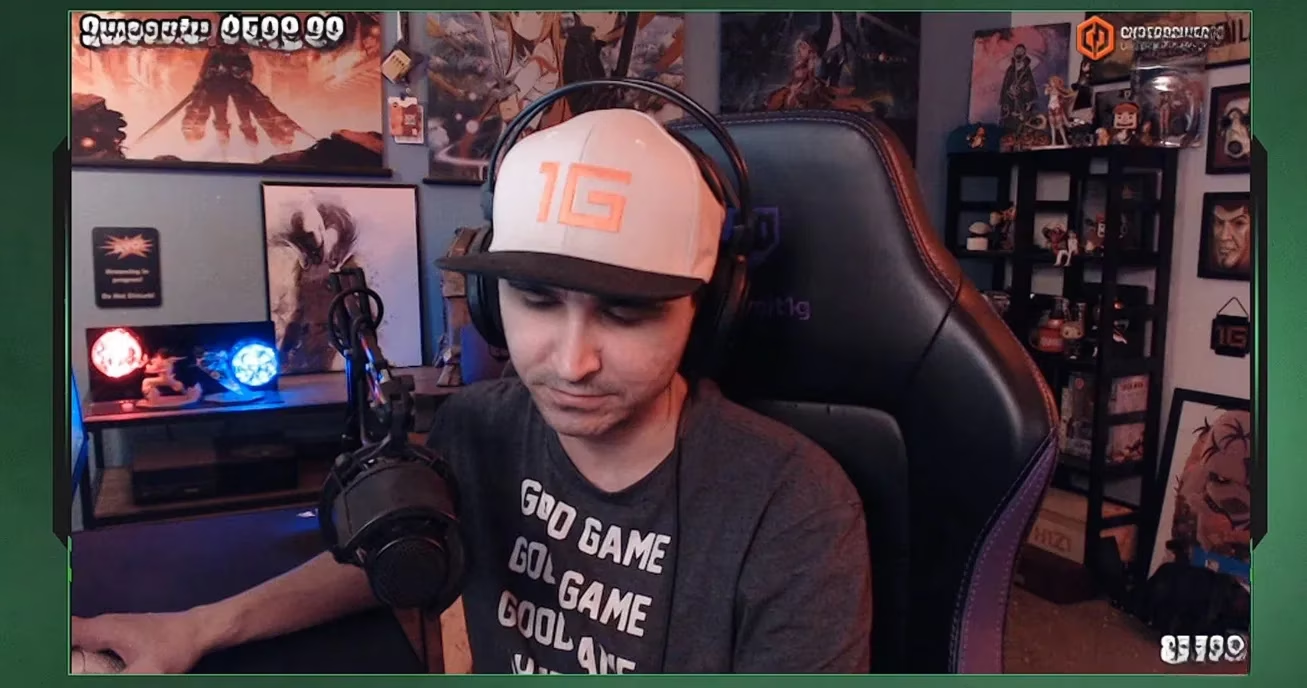
Prominent streamers could not hide their frustration. Summit1g, one of Twitch’s most recognizable faces, completely lost his composure on stream. In a blistering ten‑minute rant, he expressed pure disgust at what VALORANT’s category had become. “It helps me burnout just a little bit quicker... VALORANT looks like a piece of shit video game right now,” he fumed. The next day, Summit changed his stream title to a sarcastic “Drops Disabled. Content Only Stream,” a direct jab at the absurdity of specifying that a live broadcast is actually live. TimTheTatman also joined the mockery, commenting on how strange it was that streamers felt the need to advertise “live” content on a platform built around live streaming. Even business analyst and streamer Devin Nash lost his mind over the systematic abuse of fake accounts, noting the long‑term damage such practices inflict on the community’s trust.
Despite the outrage, the Reddit community delivered a surprisingly even‑handed response. Many users acknowledged that during the economic downturn of 2020, any extra income for content creators – even those gaming the system – was a positive. “If there was ever a time for inauthentic, undeserving streamers to make money – it’s now,” one top comment read. Yet Summit1g’s frustration was widely seen as warranted. The fake stream trend artificially skewed metrics, buried legitimate small creators, and painted a false picture of a game’s actual popularity, ultimately harming the ecosystem that both Twitch and developers rely on.
The cracks exposed in 2020 never truly healed. By 2026, the same playbook is being used for almost every major launch that offers viewer‑linked rewards. The incentives are simply too strong, and the moderation tools too weak. Temporary measures like banning certain phrases from stream titles or requiring manual verification only work for a few days before bad actors adapt. Streaming platforms now face a recurring nightmare whenever a publisher announces a drop campaign. Viewers must sift through pages of reruns, while genuine creators watch their discoverability plummet. The fake stream economy has evolved into a sophisticated operation, with bots and automated accounts that can mimic engagement more convincingly than ever before.
The lesson from the VALORANT beta remains painfully relevant: when a reward is tied to passive watching, it is the integrity of the entire category that pays the price. Until Twitch and game developers find a way to reward genuine engagement rather than raw viewership hours, the 2020 disaster will continue to repeat itself. What was once a short‑term nuisance has become a permanent stain on live streaming – a stain that creators like Summit1g warned us about, loudly and angrily, half a decade ago.