
T1 Gives Banned CS:GO Pro AZK a Fresh Start in VALORANT
T1 VALORANT signs ex-CS:GO pro AZK, offering the talented but controversial player a fresh start in competitive esports.
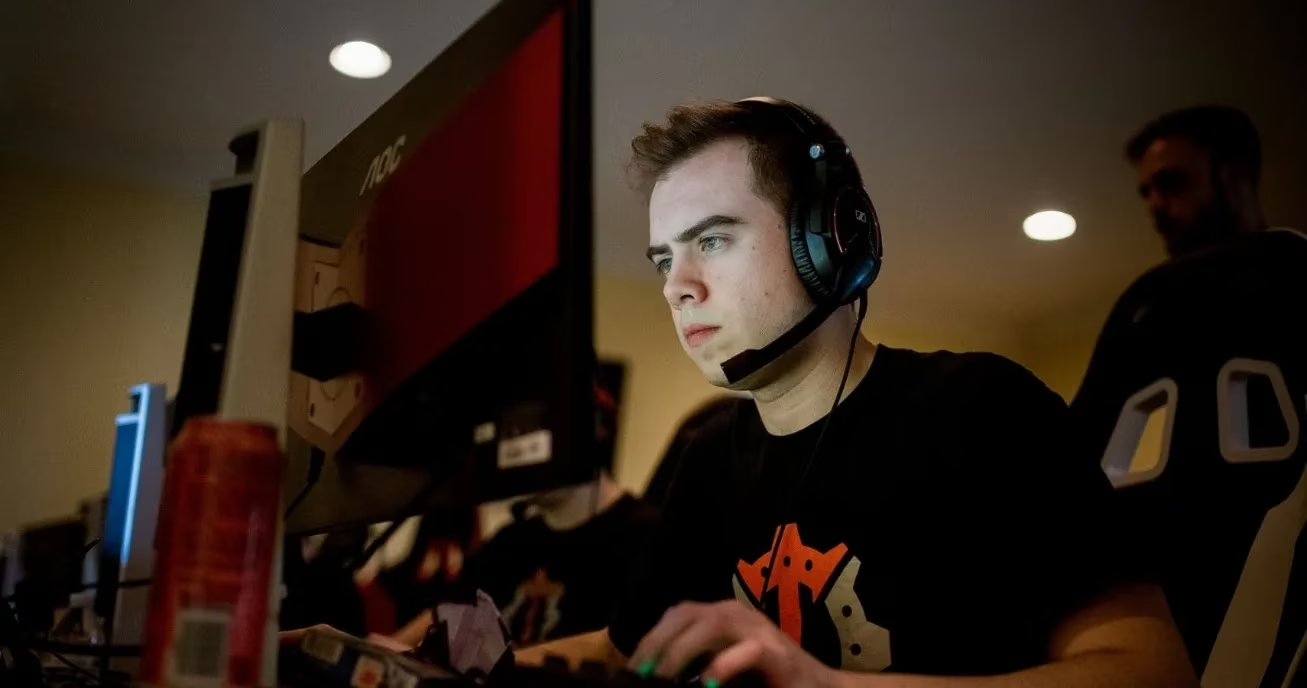
In the spring of 2020, as the gaming world eagerly pressed their way into VALORANT's closed beta, T1 Entertainment & Sports announced a signing that rippled through the tactical shooter community. The storied South Korean organization brought on former Counter-Strike professional Keven “AZK” Larivière as both a streamer and a competitive player for its nascent VALORANT division. The move did more than add firepower to a roster; it offered a second chance to one of North America's most controversial and talented players.
AZK had been a fixture in competitive Counter-Strike since the Source era, where his precise aim and calm decision-making powered Team Dynamic to multiple event wins. When Global Offensive exploded, he joined iBUYPOWER alongside Braxton “Brax” Pierce, Tyler “Skadoodle” Latham, Sam “DaZeD” Marine, and Joshua “steel” Nissan. That lineup immediately established itself as a North American powerhouse. Together, AZK and his teammates claimed trophies at the ESEA Global Finals Season 15 and CEVO Professional Season 4, and they competed in three CS:GO Majors, cementing their reputations on the world stage.
The narrative, however, took a dark turn in January 2015. A match-fixing scandal engulfed iBUYPOWER after evidence surfaced that members of the team had conspired to throw a CEVO Professional Season 5 match against NetCodeGuides. Valve responded with swift finality, issuing permanent bans to all involved, including AZK and Brax, barring them from any Valve-sponsored events for life. While certain independent tournament organizers like ESL and DreamHack later lifted their own restrictions, the Majors – the pinnacle of Counter-Strike competition – remained out of reach. The ban split the lineup, sent Skadoodle on a different path to a Major victory, and left the others searching for new homes.
In the years that followed, AZK refused to disappear. He pivoted to Overwatch, joining Team Liquid as a flex player during the game's early competitive boom, and later returned to Counter-Strike whenever eligible tournaments opened their doors. Throughout this period, his streaming channel grew steadily, eventually attracting over 27,000 followers who tuned in for his CS:GO and Overwatch gameplay. But the ban had permanently reshaped his career ceiling in Valve's ecosystem. VALORANT's arrival changed everything.
Riot Games' tactical shooter arrived as a direct spiritual competitor to CS:GO, blending precise gunplay with agent abilities in a 5v5 competitive framework. Even before its full launch in June 2020, the closed beta electrified the esports community. For players like AZK, whose mechanical skill remained elite but whose opportunities were blocked by a corporate ban, VALORANT represented a clean slate. Riot Games, the developer, operates its own competitive ecosystem and was under no obligation to honor Valve's disciplinary actions. Consequently, a wave of banned CS:GO players migrated to VALORANT, often finding organizations willing to invest in their immense talent.
T1 moved quickly. By signing AZK, the organization reunited him with Brax, who had already been recruited to its VALORANT squad. The reunion carried symbolic weight. Two lifelong friends and former teammates, their careers forever shadowed by the iBUYPOWER scandal, now had a stage free from the ban's constraints. Alongside them, T1 built out a roster aiming to dominate the early VALORANT scene. The signing was framed not just as a competitive gamble but as a content bet: AZK's established streaming audience gave T1 immediate visibility in the growing VALORANT category on Twitch.
Since 2020, VALORANT has matured into a tier-one esport. The Valorant Champions Tour now anchors a full calendar of international events, culminating in the annual VALORANT Champions tournament with multi-million-dollar prize pools. T1 has remained a constant presence in the ecosystem, cycling through rosters as the meta evolved. AZK's tenure with the organization extended well beyond the initial signing, with his role evolving over time. Through subsequent seasons, he competed in regional Challengers events, VCT qualifiers, and occasionally stepped back to focus on full-time streaming under the T1 banner. His consistency as a creator – blending high-level gameplay with the raw honesty of a veteran who had seen the highs and lows of competition – helped normalize the idea that a career in esports need not end at a ban.
The 2026 perspective offers a full arc. AZK never returned to Counter-Strike in any official Valve capacity, but his competitive spirit found its outlet in VALORANT even as younger stars emerged. His presence in T1's initial squad is now remembered as a foundational moment, a testament to how new games can rewrite career narratives. The organization's willingness to bet on talent with a complicated past paved the way for other banned players to find similar homes. By 2026, the stigma of the 2015 scandal had faded considerably, replaced by a broader understanding that competitive bans are context-bound and that athletes can evolve. AZK's channel, now well beyond 27,000 followers, continues to serve as a hub for tactical shooter fans who appreciate the depth of a seasoned mind.
In the end, the T1 signing story is less about a single player and more about an industry's capacity for reinvention. When Keven “AZK” Larivière put on the T1 jersey in 2020, he wasn't just joining another team; he was stepping into a future that had been denied to him for five years. That future, shaped by Riot's independent competitive structure and T1's savvy roster building, has sustained him as both a competitor and a content creator. And for a player who once stood at the center of one of esports' most infamous scandals, that second chance has proven to be both hard-won and thoroughly deserved.