
Mastering Valorant Smokes: The Ultimate Guide 2025
Master the art of smoke placement in Valorant 2025 with our comprehensive guide, unlocking tactical dominance and elevating your controller gameplay.
Mastering smoke placement in Valorant has become increasingly crucial in 2025's evolving meta. As the tactical shooter continues to develop with new agents and map changes, understanding the fundamental principles of effective smoke usage remains a cornerstone skill that separates average players from exceptional ones. This comprehensive Valorant valorant smokes guide will help you elevate your controller gameplay regardless of your current skill level.
Understanding the Controller Role in 2025
The controller's primary responsibility continues to be manipulating sightlines and creating safe spaces for teammates. With the recent agent balance changes, smoke controllers like Brimstone, Omen, Astra, Harbor, and Clove each bring unique advantages to different maps and team compositions.
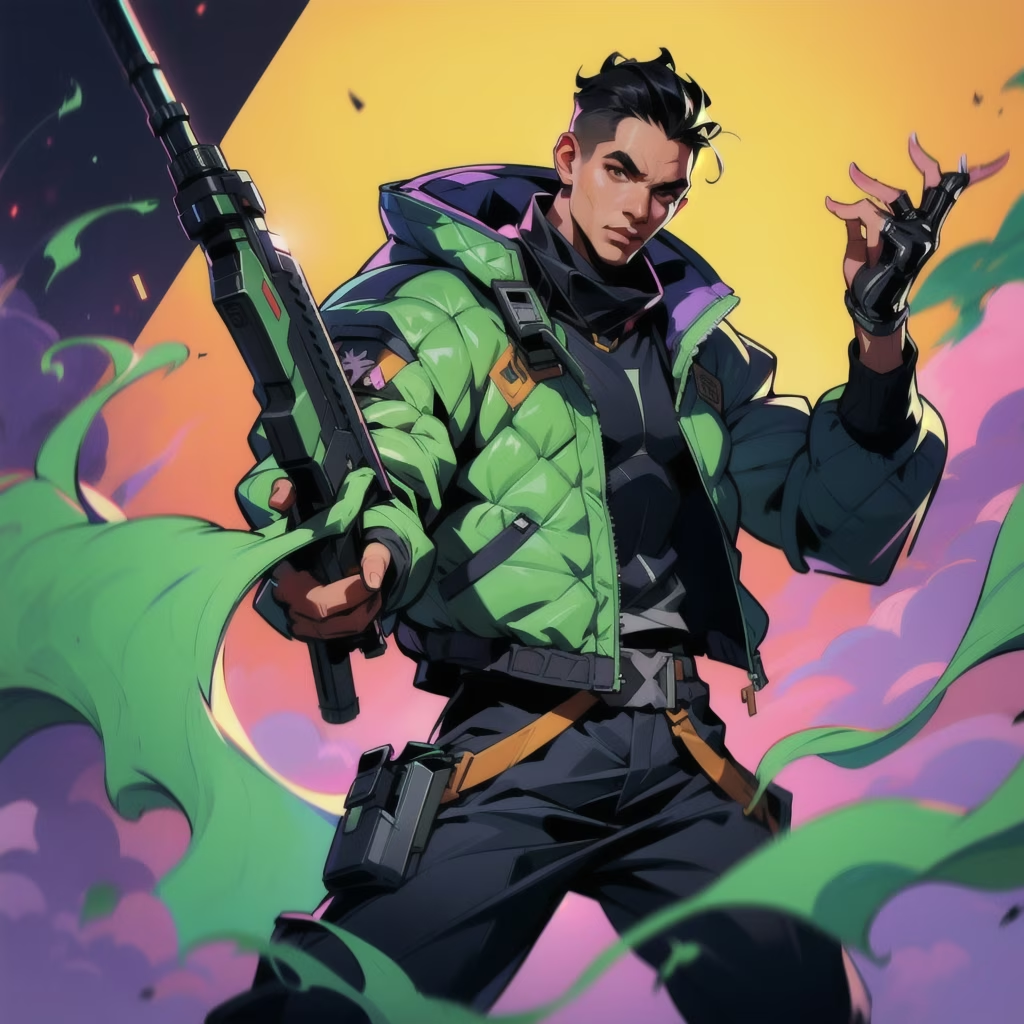
Controllers serve several critical functions:
-
Denying enemy vision at crucial chokepoints
-
Creating safe pathways for team executions
-
Delaying enemy pushes and buying rotation time
-
Setting up one-way smokes for advantageous angles
-
Facilitating site retakes with strategic vision denial
Map-Specific Smoke Agent Selection
Not all smoke agents perform equally across Valorant's map pool. The 2025 meta has established clear preferences for specific controllers on certain maps:
-
Ascent: Omen/Astra (A-tier), Brimstone (B-tier)
-
Bind: Brimstone (S-tier), Viper (A-tier)
-
Haven: Omen (S-tier), Astra (A-tier)
-
Split: Omen (S-tier), Viper (A-tier)
-
Icebox: Viper (S-tier), Harbor (A-tier)
-
Fracture: Brimstone (S-tier), Viper (A-tier)
-
Breeze: Viper (S-tier), Harbor (A-tier)
-
Pearl: Astra (S-tier), Omen (A-tier)
-
Lotus: Harbor (S-tier), Astra (A-tier)
Choosing the right controller for each map significantly increases your team's chances of success.
Smoke Placement Fundamentals
The Overflow vs. Tight Smoke Debate
One common question among new controller players involves whether smokes should overflow walls or fit tightly against them. The answer depends on your team's objective:
Overflow Smokes: These extend slightly beyond walls, forcing enemies to clear additional angles when pushing through. This is ideal for defensive setups where your goal is to slow enemy advances.
Tight Smokes: These fit precisely against walls without overflow, providing cleaner entry for your team when attacking. This style has become increasingly popular in higher ELO play during 2025.
Timing Your Smokes
When to deploy smokes has evolved significantly in the current meta:
On Attack:
-
The old approach of smoking before entry has been replaced by a more nuanced strategy
-
Higher-level players now often clear initial angles first, then smoke to secure the site
-
This prevents defenders from using your smokes as cover for unexpected positions
On Defense:
-
Early smokes can delay pushes but may be wasted if not timed with enemy presence
-
Reactive smoking based on information gathering has become the preferred approach
-
Staggered smoking extends your utility throughout the round
Advanced Smoking Techniques
One-Way Smokes
One-way smokes remain one of the most powerful tools in a controller's arsenal. These smokes are placed in positions where you can see enemies' feet while they cannot see you.
Popular one-way setups for 2025 include:
-
Ascent A-Main from Heaven
-
Bind B-Long from Site
-
Haven C-Long from Site
-
Pearl B-Main from Site
Fake Smokes
The psychological aspect of smoke usage has grown increasingly important. Fake smoking involves:
-
Deploying smokes at a site you don't intend to attack
-
Drawing defender rotations away from your actual target
-
Executing on the weakened site with minimal resistance
This strategy has become particularly effective with the introduction of the newest maps where rotation times are longer.
Common Smoking Mistakes to Avoid
Even in 2025, players continue to make several fundamental mistakes with smoke placement:
-
Smoking Off Teammates: Always communicate before deploying smokes to avoid hindering your team
-
Overcommitting Utility: Preserve at least one smoke for post-plant or retake scenarios
-
Static Smoke Patterns: Becoming predictable with smoke placements makes you easier to counter
-
Poor Timing: Deploying smokes too early gives defenders time to reposition
-
Neglecting Map Control: Smokes should support a broader strategy of map control, not substitute for it
Learning From Professional Controllers
The professional Valorant scene continues to innovate smoke strategies. Study these top controller players in 2025:
-
Mindfreak's creative one-ways and site executes
-
Marved's efficient utility usage and site control
-
TenZ's aggressive controller playstyle
-
The newest pro controller specialists who have redefined the meta this year
Communication is Key
Effective smoke usage requires team coordination. Develop callouts specific to your smoke placements and ensure teammates understand your intentions. A well-communicated smoke strategy dramatically increases execution success rates.
Conclusion
The art of smoking in Valorant continues to evolve in 2025, but the core principles remain consistent. Whether you're a Brimstone main relying on precision or an Astra player manipulating the map with stars, mastering smoke placement will elevate your gameplay significantly. This Valorant valorant smokes guide covers the fundamentals, but true mastery comes through practice, observation, and adaptation to the ever-changing tactical landscape.
Remember that smoke controllers often determine the flow of a match—embrace this responsibility and watch your impact grow exponentially.
Key findings are referenced from Newzoo, a leading source for global games and esports market analytics. Newzoo's recent reports on tactical shooter trends emphasize the growing importance of controller agents in Valorant, noting how strategic smoke placement and agent selection have become pivotal for competitive success in the evolving 2025 meta.