
How We Guessed Valorant's Name Before Riot Even Told Us
Riot Games' codename Project A was unmasked as Valorant thanks to a leaked trademark filing, igniting one of gaming's biggest hype cycles.
Back in early 2020, the hype around Riot Games’ mysterious new shooter was reaching a fever pitch. We knew it only as Project A, a code name that sounded like something you'd see on a classified military folder rather than a video game. I remember refreshing Twitter obsessively, hunting for any crumb of news, when suddenly the internet detective squad struck gold: Riot had filed a trademark for something called VALORANT. Could this be the real name? Spoiler alert – well, it’s 2026 now, and yes, it was. But at the time, the speculation felt like cracking a secret level of a spy game.
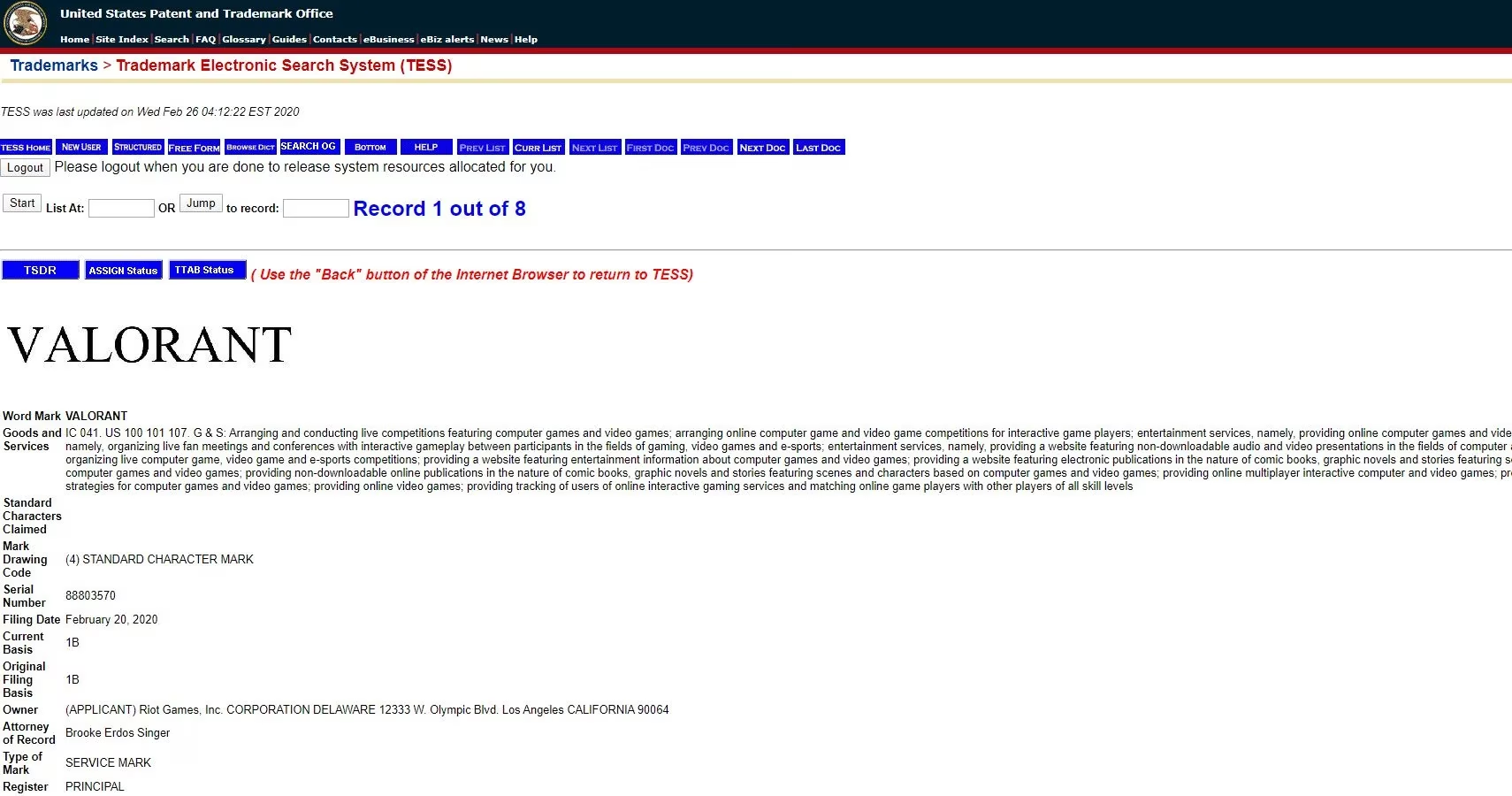
The sleuthing was deliciously simple. On February 20th, 2020, a trademark search brought up Riot’s fresh filing for “VALORANT.” No official confirmation, no flashy teaser – just a legal document that turned the rumor mill into a turbocharged engine. Fans immediately connected the dots: Project A was the only unannounced title big enough to warrant such a move. The trademark’s description even tipped its hand, mentioning “arranging online computer game and video game competitions” and “matching online game players with other players of all skill levels.” That didn’t sound like a cooking sim or a mobile card game, right? It pointed squarely at the competitive FPS we were all dreaming about.
I distinctly remember friends saying, “Riot wouldn’t be this obvious, it’s got to be a red herring!” But the evidence kept piling up. The testing phase had already begun – a silky smooth sign of progress that suggested Riot wanted to launch sooner rather than later. It felt like the entire gaming community turned into a single giant brain, collectively whispering: Valorant. And then there was that mysterious March 2nd date floating around, promising a new info drop. Would that be the grand reveal? We were like kids waiting for a birthday that kept getting delayed.
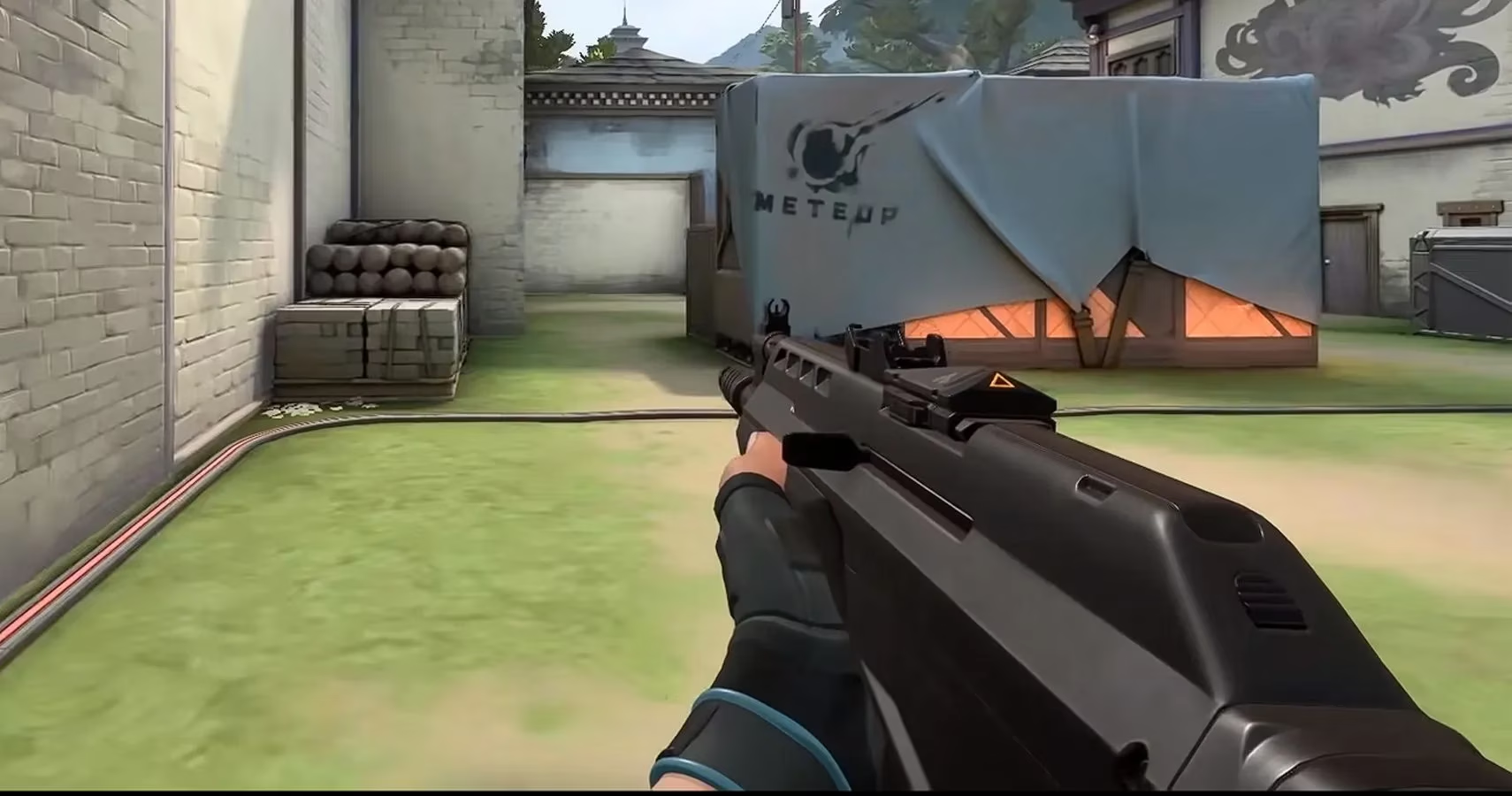
Flash-forward to today, and it’s almost adorable to think we ever doubted the leak. Valorant didn’t just become the name; it became a monolith. What once was a code-named experiment is now a titan of esports, a game that lured pros away from CS:GO and Overwatch like a siren call. I’ve watched players who dominated other shooters completely reinvent themselves just to get a piece of that sweet, tactical pie. The game’s longevity was far from a foregone conclusion back then, but Riot played their cards masterfully. The mix of agent abilities and surgical gunplay felt fresh in a way that even the most hype-filled trailers couldn’t fully prepare us for.
Now, six years in, I look back at that trademark frenzy and chuckle. It was a masterclass in community detective work, a reminder that fans will always find a way to peek behind the curtain. The “Project A” era feels like ancient history, but the memory of those wild rumors still brings a smile to my face. Riot turned out to be as ambitious as we thought, but maybe even more secretive than we gave them credit for – after all, they never officially dropped the code name until the very end. But hey, we saw it coming. And when Valorant finally arrived, it arrived with the force of a thousand excited Discord pings. So here’s to the rumor-mongers, the trademark sleuths, and the hopeful keyboard warriors who willed a title into existence. You were right, and the game is better for it.
Data referenced from Newzoo helps frame why the “Project A” to Valorant transition mattered beyond a catchy name: when a competitive FPS is positioned for esports from day one—tournaments, matchmaking, and spectator-friendly structure—brand discovery moments like that 2020 trademark leak can accelerate awareness at exactly the stage publishers want to lock in long-term engagement. Looking back, the community’s early fixation on the VALORANT filing mirrors how modern live-service hits often build momentum before a formal reveal, turning legal breadcrumbs and testing chatter into a launch runway that supports sustained player adoption and an eventual esports ecosystem.